
A Rabbit's Fourth Week of Life
A rabbit's fourth week of life brings increased play, personality, and independence. Learn what to expect as kits eat more, grow stronger, and explore further.
GROWTH AND DEVELOPMENT
Amy Jackson & The Hot Cross Buns
11/20/20243 min read
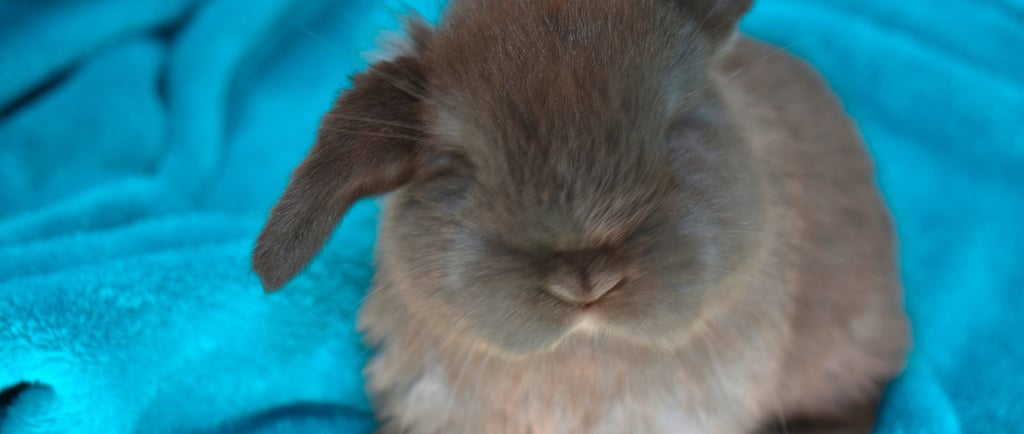

A Rabbit's Fourth Week of Life
When Growth Becomes More Subtle
By the fourth week of life, the changes are no longer as dramatic as they were in the earlier weeks.
Kits continue to grow steadily, becoming a bit larger and heavier, but the transformation is less obvious from one day to the next. What changes most during this time is not just their size, but how they move, interact, and engage with the world around them.
Ears, Expression, and Individual Charm
For many Holland Lops, this is the week when ears begin to fully lop if they have not already.
Some rabbits take a little longer, and the process can unfold over several days. Others develop what we affectionately call “airplane ears,” where the ears sit out to the sides or lift partway when the rabbit is curious or alert.
While this may not meet breed standards for showing, we find these variations endearing. The movement of their ears often reflects their reactions, offering a quiet window into how they experience the world.
Nursing and the Last Stages of Dependence
Kits are still nursing during this stage, often with great enthusiasm.
It is not uncommon to see them on their backs beneath their mother, little legs kicking as they latch on. When the entire litter gathers to nurse at once, it can resemble a small cluster lifting her upward, like a car raised on jacks.
These moments are fleeting, as independence is beginning to take hold.
Eating, Drinking, and Developing Habits
By the fourth week, interest in solid food becomes much more consistent.
Kits dive into hay with enthusiasm and begin eating pellets more confidently. It is not unusual to find one sitting directly in the food bowl, contentedly eating.
At this stage, food and water need to be checked frequently to ensure there is enough for both the mother and her growing litter.
This is also when kits begin consuming their own cecotropes, which are soft, nutrient-rich droppings eaten directly as part of normal digestion. Cecotropes may resemble small clusters with a slightly glossy appearance and a distinct odor.
This process is essential for nutrient absorption and continues throughout a rabbit’s life.
Cleanliness and Care
As diets expand, small care needs begin to shift.
Some kits may develop clumps of droppings around their hindquarters, especially as they adjust to new foods. Checking and gently cleaning them when needed helps prevent irritation and keeps them comfortable.
This stage is usually brief and resolves as their digestion stabilizes.
Movement, Play, and Energy
Energy increases noticeably during the fourth week.
Kits begin experimenting with movement in new ways, attempting small binkies and bursts of speed. Coordination continues to improve, and playful behavior becomes more frequent.
More outgoing kits often lead the way, encouraging quieter littermates to join in. Watching them begin to interact, explore, and respond to one another is one of the most enjoyable parts of this stage.
Personality Becoming Clear
By this point, individual personalities are no longer subtle.
Some kits are bold and constantly in motion . Others are calm, observant, and more reserved. Some seek out interaction, while others prefer the comfort of familiar spaces.
These differences become easier to recognize with each passing day.
The Challenge of Capturing the Moment
This is also the stage where photographing them becomes…challenging.
Quieter kits may sit still long enough for a clear image, while the more energetic ones rarely pause, resulting in a collection of blurry reminders of their enthusiasm.
Even so, these moments are worth capturing.
Still a Time for Comfort
Despite their growing independence, kits still return to what is familiar.
At the end of the day, they gather with their mother and littermates, settling into warmth and routine. They may spend more time exploring, but they are not yet ready to leave that sense of security behind.
A Week of Transition
The fourth week is a bridge between dependence and independence.
Kits are eating more, moving more, and showing more of who they are becoming. While they still rely on their mother, they are beginning to take their first steps toward life beyond the nest.
________________________________________________________________________________________________________________
Following the Journey: From Kindling to Placement
The early weeks of a rabbit’s life unfold quickly, with each stage building on the one before it. If you would like to follow that progression more closely, these posts walk through the process from birth through placement day.
• Rabbit Kindling: What Can Go Right, What Can Go Wrong
• A Rabbit's First Week of Life
• A Rabbit's Second Week of Life
• A Rabbit's Third Week of Life
• A Rabbit's Fourth Week of Life
• A Rabbit's Fifth Week of Life
• A Rabbit's Sixth Week of Life
• A Rabbit's Seventh Week of Life
• Placement Day: What to Expect When You Bring Your Bun Home
Taken together, they offer a complete picture of how rabbits grow, develop, and prepare for life with their new families.
Copyright 2016-present. All rights reserved by Hot Cross Buns Holland Lops. All images and content fall under the sole ownership of Hot Cross Buns Holland Lops.
Hot Cross Buns Holland Lops
Oberlin, Ohio
Indoor companion Holland Lops raised with care since 2016.
Email: hcbhollands@gmail.com