
A Rabbit's Third Week of Life
A rabbit's third week of life brings rapid growth, curiosity, and early exploration. Learn what to expect as kits begin moving, eating, and showing personality.
GROWTH AND DEVELOPMENT
Amy Jackson & The Hot Cross Buns
11/13/20244 min read
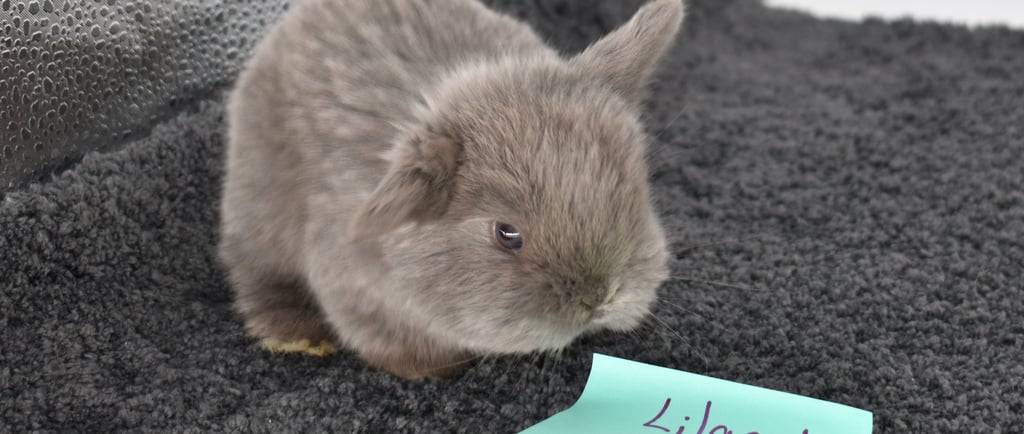
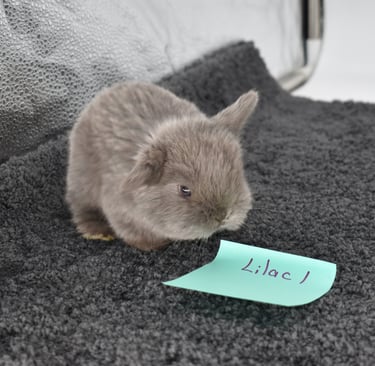
A Rabbit's Third Week of Life
When They Begin to Feel Like Real Bunnies
By the third week of life, the change is unmistakable.
Kits are larger, stronger, and far more aware of the world around them. What began as quiet, fragile life now starts to feel active and expressive.
Some babies leave the nest box eagerly, while others remain tucked into the warmth a little longer. More adventurous kits explore early, while quieter ones follow more slowly, often seeking out their littermates if they find themselves alone.
Leaving the Nest Behind
As exploration increases, the nest box begins to lose its purpose.
Once the kits are consistently climbing out and no longer remaining inside, it is removed and replaced with a lower, safer space for resting. A simple box with a soft lining allows them to continue cuddling together while avoiding accidental injury from more active littermates or their mother’s movement.
This marks a quiet transition from full dependence to early independence.
First Interest in Food
During this week, kits begin to show interest in solid food.
They nibble at hay and may investigate their mother’s pellets, though their main source of nutrition is still milk. Their increasing activity is often the best indicator that they are feeding well.
At this stage, it is not unusual to see them follow their mother closely, taking advantage of any opportunity to nurse. Even brief pauses from the doe are met with eager attempts from the kits to sneak in another feeding.
Monitoring Growth and Supporting the Smaller Ones
With increased fluff and movement, it can become more difficult to judge a kit’s condition at a glance.
When a normally active baby becomes quiet, we take a moment to check more closely. Feeling along the spine can help determine whether a kit is maintaining a healthy weight.
If additional support is needed, we may place the kit in a contained space with the mother to encourage feeding. In some cases, supplementation may be necessary. These moments are not common, but when they arise, early attention helps the kit regain strength quickly.
Movement, Play, and Coordination
Strength and coordination develop quickly during the third week.
Kits begin to move with more purpose, transitioning from slow, uncertain movements into bursts of activity. Running, hopping, and playful interaction become part of their daily rhythm.
One of the most endearing milestones at this stage is learning to sit up on their hind legs. They are unsteady at first, often tipping over as they try to balance, but with practice, they begin to groom themselves and interact more intentionally with their surroundings.
They also begin grooming one another, a quiet early sign of social bonding.
Handling and Safety
With strength comes unpredictability.
Kits at this age can twist, kick, and launch themselves unexpectedly. Because of this, handling should always take place over a soft, secure surface, often at ground level.
Curiosity is growing quickly, and with it comes risk.
Everything becomes something to investigate, including spaces or objects that may not be safe. Careful attention to their environment becomes essential. Even familiar setups can present new challenges as kits become more capable of climbing, squeezing, and exploring beyond previous limits.
A Lesson in Curiosity and Boundaries
At this stage, curiosity can sometimes outpace safety.
We once had a kit manage to escape a carefully prepared enclosure, despite it being set up in the same way we had used successfully many times before. She explored beyond her space and encountered another doe, who responded instinctively to protect her territory.
We found the little escapee during a routine check, shaken but recoverable. From that point on, we adjusted the setup to better match the abilities of growing kits.
These moments serve as a reminder that what worked yesterday may not be enough today.
Awareness of the Environment
By the third week, kits are fully aware of their surroundings.
Their eyes are bright, their ears are active, and their responses to sound and movement become more defined. Some may startle easily, while others investigate new stimuli with confidence.
Their personalities are no longer subtle.
Active kits become more adventurous. Cuddly kits remain more reserved. Inquisitive kits explore everything within reach, while sociable kits seek out interaction without hesitation.
Each one is becoming an individual.
A Week Full of Life
The third week is full of energy, curiosity, and rapid development.
Kits are no longer just growing. They are learning, exploring, and beginning to interact with the world in meaningful ways.
It is a stage that requires attentiveness, flexibility, and a willingness to adjust as quickly as they do.
It is also one of the most enjoyable weeks to watch.
____________________________________________________________________________
Following the Journey: From Kindling to Placement
The early weeks of a rabbit’s life unfold quickly, with each stage building on the one before it. If you would like to follow that progression more closely, these posts walk through the process from birth through placement day.
• Rabbit Kindling: What Can Go Right, What Can Go Wrong
• A Rabbit's First Week of Life
• A Rabbit's Second Week of Life
• A Rabbit's Third Week of Life
• A Rabbit's Fourth Week of Life
• A Rabbit's Fifth Week of Life
• A Rabbit's Sixth Week of Life
• A Rabbit's Seventh Week of Life
• Placement Day: What to Expect When You Bring Your Bun Home
Taken together, they offer a complete picture of how rabbits grow, develop, and prepare for life with their new families.
Copyright 2016-present. All rights reserved by Hot Cross Buns Holland Lops. All images and content fall under the sole ownership of Hot Cross Buns Holland Lops.
Hot Cross Buns Holland Lops
Oberlin, Ohio
Indoor companion Holland Lops raised with care since 2016.
Email: hcbhollands@gmail.com