
When a Rabbits Becomes Aggressive: What Aggressive Rabbit Behavior Means
Are you suddenly encountering aggressive rabbit behavior? Learn what causes biting, lunging, and territorial behavior, including hormones, fear, and pain, and how to respond in a way that builds trust.
Amy Jackson & The Hot Cross Buns
4/20/20263 min read
When a Rabbit Becomes Aggressive: What It Means and What to Do
When Behavior Changes Suddenly
It can feel unsettling when a rabbit who once seemed calm and easygoing begins to lunge, nip, or pull away from interaction.
Often, it feels sudden.
One day everything feels peaceful, and the next, your rabbit seems guarded or reactive in a way that doesn’t quite make sense.
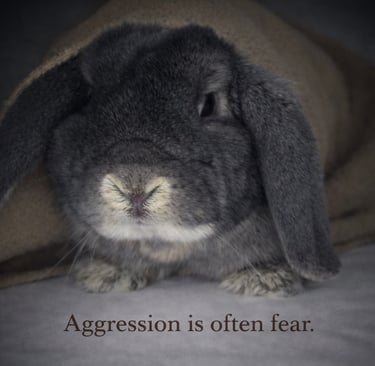
In almost every case, aggression in rabbits is not random.
It is communication.
Rabbits don’t become aggressive without a reason. They are responding to something—either in their environment, their body, or their sense of safety.
When a Rabbit Doesn’t Feel Safe
Rabbits are prey animals, and their instincts are built around survival.
If a rabbit feels cornered, approached too quickly, or unable to retreat, their response may shift from avoidance to defense. What looks like aggression is often a rabbit saying, as clearly as they can:
“I don’t feel safe.”
This can happen when:
hands reach into their space unexpectedly
they are picked up or restrained
they are approached while resting or eating
they don’t have a clear path to move away
A rabbit who cannot flee may choose to stand their ground instead.
The Role of Hormones
One of the most common reasons for a shift in behavior is hormonal change.
As rabbits reach maturity, hormones can influence how they interact with both people and their environment. This is often more noticeable in does, who may become more territorial, protective, or reactive.
You may see:
lunging or boxing
nipping when you enter their space
guarding behavior around food or litter areas
This is not a personality flaw but biology.
In many cases, these behaviors soften significantly after spaying or neutering, once hormones have had time to settle.
When Aggression Is a Sign of Pain
A rabbit who is uncomfortable or in pain may become defensive in ways that feel out of character.
If handling suddenly causes a reaction, or your rabbit becomes withdrawn and reactive at the same time, it’s important to consider whether something physical may be going on.
Rabbits are very good at hiding illness and they may express pain by lashing out. If your normally calm and happy rabbit responds to touch by nipping, biting, or trying to push you away, please consider a trip to the vet for a check up. A split nail, infection, arthritis, or some other medical problem could be the source of your bun's unexpected behavior.
The Impact of Past Experience
For rabbits who have been rehomed or rescued, behavior can sometimes reflect what they’ve experienced before.
A rabbit who was handled roughly, chased, or not given the opportunity to feel safe may take longer to trust. Abused or neglected animals have been taught to not trust people, so aggressive behavior is self-protection at its deepest level.
What looks like aggression may actually be fear that hasn’t yet had the chance to soften.
These rabbits need:
more time
more space
more predictability
more reassurance that they are deserving of love and kindness
Trust is built slowly, but it can be built.
Moving Forward with Understanding
The most important thing to remember is that your rabbit is not trying to be difficult.
They are trying to communicate.
When you shift your focus from correcting behavior to understanding it, everything begins to change. Creating a calm environment, respecting boundaries, and addressing underlying causes will do far more than forcing interaction.
In many cases, the aggression fades as the rabbit begins to feel safe again.
What takes its place is something much more meaningful than compliance; it’s trust.
________________________________________________________________________________________________________________
You May Also Find Helpful
What Makes a Rabbit Feel Safe?
Aggression often starts with insecurity. This helps you step back and evaluate whether your rabbit’s environment truly supports calm behavior.
Rabbit Stress and How to Reduce It
Stress is one of the most common underlying causes of aggression. This gives a clearer picture of what may be building beneath the surface.
Why Your Rabbit Isn't Affectionate and How to Build Trust
A rabbit that doesn’t trust will often defend itself. This walks through how trust is built over time in a way that reduces reactive behavior.
Why Spaying and Neutering Rabbits Is Essential
Hormones play a significant role in territorial and aggressive behavior. This helps explain what changes and what doesn’t.
Rabbit Nip vs Bite: What’s the Difference?
Not all “aggression” is the same. This helps clarify what you’re actually seeing before you try to fix it.
Copyright 2016-present. All rights reserved by Hot Cross Buns Holland Lops. All images and content fall under the sole ownership of Hot Cross Buns Holland Lops.
Hot Cross Buns Holland Lops
Oberlin, Ohio
Indoor companion Holland Lops raised with care since 2016.
Email: hcbhollands@gmail.com