
Why Your Rabbit Isn't Affectionate and How to Build Trust
If you're wondering why your rabbit isn't affectionate, it's probably nothing personal. Learn how rabbits build trust, what to expect, and how to gently develop a meaningful bond over time.
Amy Jackson & The Hot Cross Buns
4/13/20262 min read
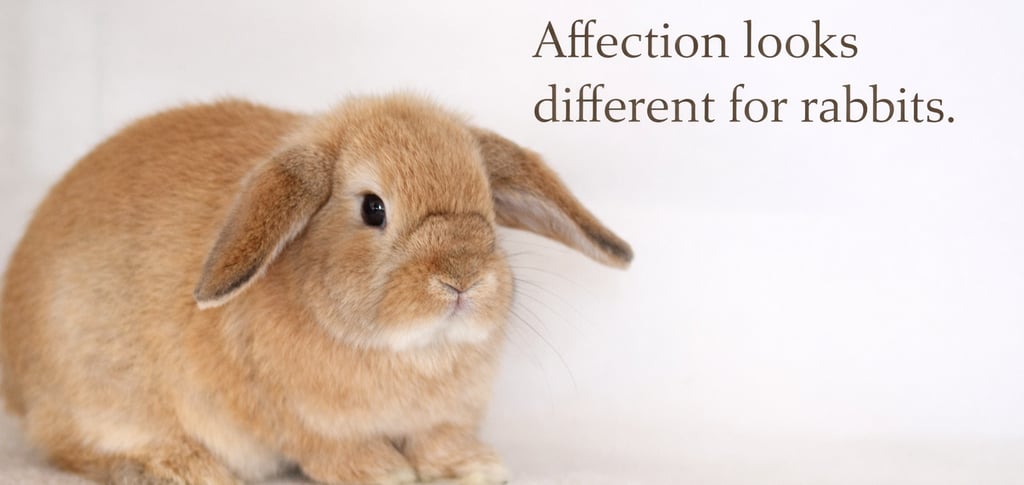
Why Your Rabbit Isn’t Affectionate (Yet)
When Expectations Don’t Match Reality
One of the most common expectations people have when bringing a rabbit home is that affection will come quickly. It is easy to picture a gentle companion who enjoys being held, seeks out attention, and settles comfortably into family life right away.
When that does not happen, it can feel confusing.
A rabbit who keeps her distance, moves away when approached, or seems uninterested in interaction can leave families wondering what they are doing wrong—or whether the rabbit simply is not affectionate at all.
In most cases, what you're seeing is not a lack of affection.
It's the beginning of trust.
Why Rabbits Don’t Show Affection Right Away
Rabbits are prey animals, and that shapes how they experience the world. They are naturally cautious, observant, and slow to assume that something unfamiliar is safe.
When they enter a new home, everything is new—the smells, the sounds, the people, and the routines.
Before affection can develop, a rabbit needs to feel secure.
That sense of safety does not happen instantly. It builds gradually through repeated experiences that show the rabbit that nothing in their environment is going to harm them. Quiet presence, gentle interaction, and allowing the rabbit to approach on their own terms all contribute to that process.
Why Being Picked Up Often Works Against You
One of the biggest challenges comes from the instinct to pick a rabbit up in order to bond with them.
For most rabbits, being lifted off the ground feels frightening rather than comforting. Even a rabbit who will eventually enjoy closeness often needs time before they feel safe enough to accept that kind of interaction.
Rushing affection can slow the bonding process instead of strengthening it. A rabbit who feels pressured is far more likely to withdraw than to engage.
How Real Bonding Actually Happens
The strongest bonds are built on the floor.
Sitting nearby, allowing your rabbit to explore, and offering gentle pets when they come close creates a foundation of trust that feels safe to them. These moments may seem small, yet they are exactly what your rabbit needs.
Over time, many rabbits begin to seek out that connection on their own.
When that happens, it carries a depth that instant affection never could.
Affection Doesn’t Always Look the Way You Expect
Some rabbits will always be more independent than others. Personality plays a role, just as it does with any animal.
Independence, however, is not the same as indifference.
A rabbit who chooses to sit near you, relaxes in your presence, or quietly includes you in their space is showing a form of affection that is subtle, but deeply genuine.
It may not look like what you expected but it's still real.
Trust Comes Before Affection
If your rabbit is not affectionate yet, it does not mean they never will be.
It means they are still learning that they can trust you.
Once that trust is in place, affection often follows—quietly, naturally, and on their terms.
________________________________________________________________________________________________________________
Additional Suggested Reading:
What Makes a Rabbit Feel Safe?
Affection grows out of security. This helps you understand what your rabbit needs in order to relax and begin trusting.
Building Trust: How to Bond with a Rabbit
A practical look at how trust develops over time through consistent, respectful interaction.
Why Most Rabbits Dislike Being Picked Up
Many rabbits pull away simply because common handling methods feel unsafe. This explains why.
Rabbit Stress and How to Reduce It
A stressed rabbit cannot engage in a relaxed, affectionate way. This helps you recognize and reduce underlying tension.
Does My Rabbit Like Me?
Not all connection looks the same. This helps you recognize the quieter signs that your rabbit is already engaging with you.
Copyright 2016-present. All rights reserved by Hot Cross Buns Holland Lops. All images and content fall under the sole ownership of Hot Cross Buns Holland Lops.
Hot Cross Buns Holland Lops
Oberlin, Ohio
Indoor companion Holland Lops raised with care since 2016.
Email: hcbhollands@gmail.com