
Rabbit Stress and How to Reduce It
Learn what causes stress in rabbits and how to create a calm, safe environment that helps your bunny feel secure and healthy. As prey animals, rabbits carry a lot of fear of the unknown. Understanding rabbit stress and how to reduce it will help your rabbit feel safe and secure in your home.
Amy Jackson & The Hot Cross Buns
3/20/20263 min read
Understanding Rabbit Stress: What Upsets Rabbits and How to Help Them Feel Safe
Rabbits are gentle, observant little creatures who experience the world very differently than we do.
Because they are prey animals, their instincts are always quietly at work in the background. They are constantly taking in their surroundings, watching, listening, and deciding whether they are safe.
That means something that feels ordinary to us—a loud laugh, a barking dog, a sudden movement across the room—can feel overwhelming to a rabbit who hasn’t had time to understand it.
And when a rabbit feels unsafe, it doesn’t just affect their emotions. It can affect their health, their appetite, and their ability to settle comfortably into your home.
Why Stress Matters More Than You Might Expect
Stress in rabbits isn’t just a passing moment of discomfort.
A rabbit who feels frightened or overwhelmed may stop eating, withdraw, or become very still and quiet. In some cases, stress can contribute to digestive slowdowns or more serious conditions that require prompt attention.
What Tends to Upset Rabbits
Every rabbit is different, but there are certain situations that commonly cause stress.
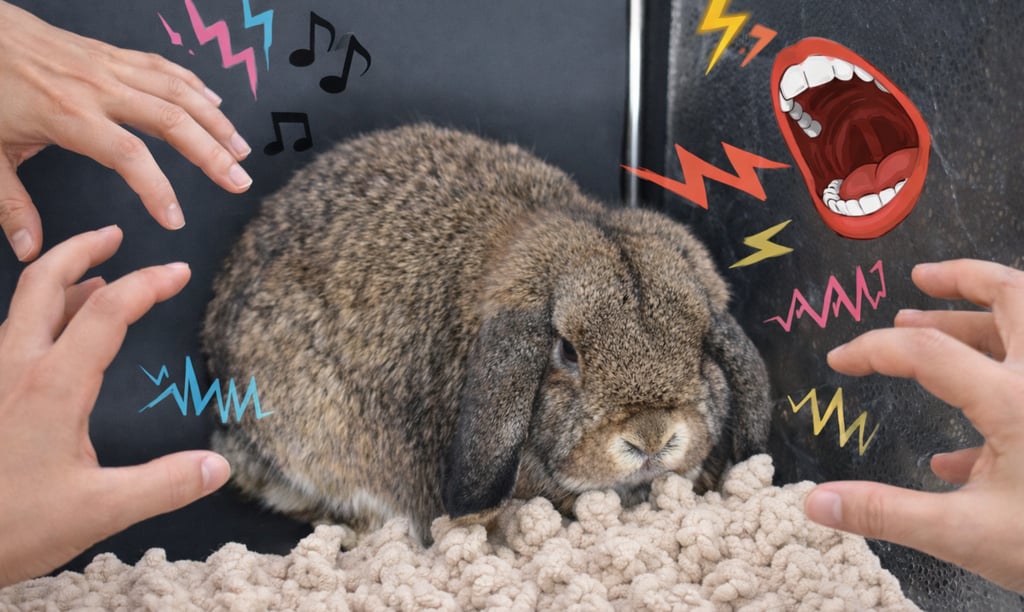
Loud or sudden noise is one of the most frequent. Raised voices, blaring music, or even the hum of machinery can make a rabbit feel like something is wrong, even if everything seems perfectly normal to us.
Being chased—or even approached too quickly—can also trigger a strong fear response. This can come from other pets, children who are moving quickly, or even well-meaning attempts to pick a rabbit up before trust has been built.
Unfamiliar people can feel overwhelming as well. Rabbits prefer to observe first. When too many new people are interacting with them at once, especially with quick movements or eager hands, it can leave them unsure and unsettled.
New environments can have a similar effect. Rabbits feel safest in spaces they recognize. Being taken to unfamiliar places, even temporarily, can make them feel exposed and unsure of their surroundings.
And finally, many rabbits are uncomfortable with being picked up. This instinct runs deep. Being lifted off the ground can feel like being caught by a predator, even when they are completely safe.
👉 Understanding Your Bunny: Why Most Rabbits Dislike Being Picked Up
How Stress Can Show Itself
Sometimes stress is obvious. Other times, it’s quiet.
A rabbit may freeze and go still. They may hide more than usual, or thump to express that something feels wrong. Some rabbits stop eating, while others become tense and wide-eyed, watching everything around them.
These small changes are important. They are your rabbit’s way of communicating that something doesn’t feel quite right.
Helping Your Rabbit Feel Safe
The goal isn’t to keep your rabbit from ever experiencing anything new. It’s to help them experience new things in a way that still feels safe.
A calm home environment makes a tremendous difference. Rabbits do best in spaces where noise is moderate, movement is predictable, and they have a place to retreat when they need rest.
Giving your rabbit a safe “home base” is one of the most important things you can do. A quiet enclosure, a covered hide space, or even a familiar corner of the room can provide comfort when something feels overwhelming.
When introducing anything new—a person, a space, or even a routine—it helps to slow down. Let your rabbit observe first. Let them come forward when they feel ready, rather than being pushed into interaction.
Spending time on the floor with your rabbit, allowing them to approach you at their own pace, is one of the best ways to build trust over time.
If you have other pets, careful management is essential. Even friendly animals can feel unpredictable to a rabbit. A consistently safe, separate space allows your rabbit to relax without feeling like they need to stay alert.
A Gentle Reminder
When a rabbit feels safe, everything else begins to fall into place.
They eat well. They explore. They relax. Their personality begins to shine in ways that simply aren’t possible when they feel unsure or afraid.
Creating that sense of safety isn’t complicated—but it does require awareness, patience, and a willingness to see the world from your rabbit’s perspective.
Want to Learn More?
👉 Bunny-Proofing Your Home: Creating a Safe Space for Your House Rabbit
👉 How to Bond with Your Rabbit
👉 What To Do In The First Two Hours When Your Rabbit Stops Eating
Thinking About Bringing a Rabbit Home?
Understanding how rabbits experience the world is one of the best ways to set them up for success.
👉 Questions to Ask Before Bringing a Rabbit Home
👉 View Available Buns
Copyright 2016-present. All rights reserved by Hot Cross Buns Holland Lops. All images and content fall under the sole ownership of Hot Cross Buns Holland Lops.
Hot Cross Buns Holland Lops
Oberlin, Ohio
Indoor companion Holland Lops raised with care since 2016.
Email: hcbhollands@gmail.com