
Bunny Begging: What It Means When Your Rabbit Sits Up
What does a bunny begging mean? Learn to understand why your rabbit sits up on their hind legs, what they are communicating, and how to respond in a balanced, healthy way.
Amy Jackson & The Hot Cross Buns
3/5/20252 min read
Bunny Begging: What It Means When Your Rabbit Sits Up
When That Little Face Lifts Toward You
If you spend any time living with rabbits, you will likely see it.
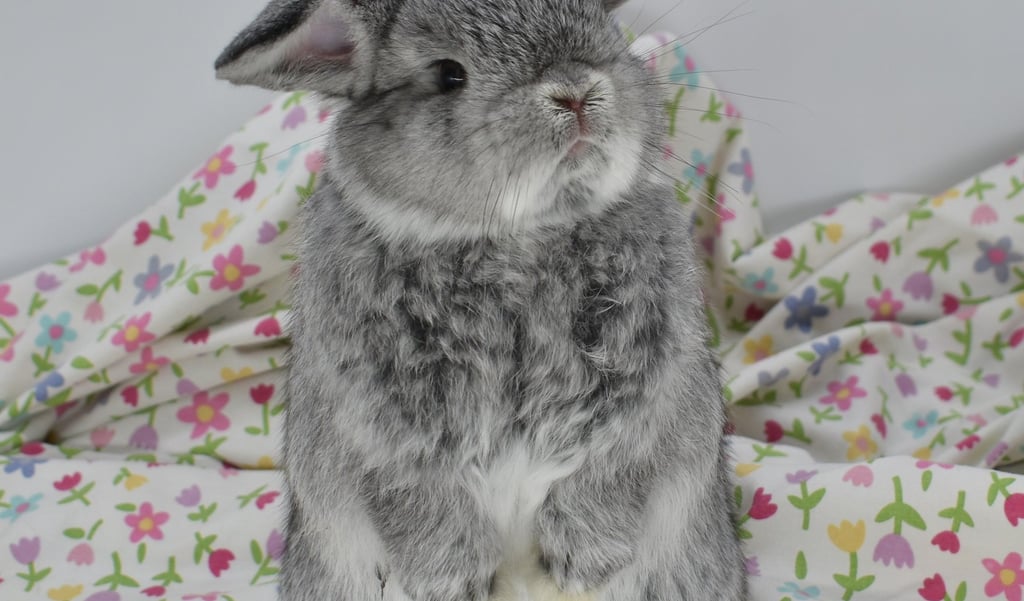
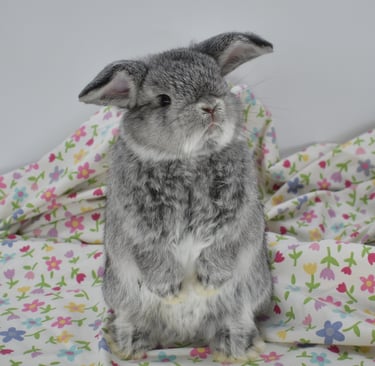
Your rabbit rises up onto their hind legs, front paws tucked close, nose lifted toward you with quiet intensity. It is often described as “begging,” and while the pose is undeniably endearing, it's also a form of communication.
It tends to stop people in their tracks. The moment feels intentional, almost as though your rabbit is trying to say something specific.
In many ways, they are.
A Natural Expression of Curiosity
Rabbits are observant and aware of their surroundings.
Sitting up allows them to see and smell more clearly, especially when something has caught their attention. This behavior often begins when kits are just a few weeks old, as they become more aware of their environment and begin to explore beyond the nest.
For some rabbits, the behavior fades as they grow and their confidence increases. Others continue to use it throughout their lives, particularly those with more inquisitive or interactive personalities.
Even rabbits who no longer fully sit upright may express the same intent in quieter ways, stretching their noses forward with that same focused, expectant posture.
More Than Just a Request for Food
Begging is often associated with treats, but it is not always driven by hunger.
A rabbit may sit up because they hear something unfamiliar, notice movement, or anticipate interaction. It can be a response to your presence, the sound of a bag opening, or a step in a familiar routine.
In some homes, feeding patterns unintentionally shape this behavior. If a rabbit consistently receives a treat when they sit up, they may begin to repeat the posture with that expectation.
Even so, the behavior itself begins as curiosity and awareness, not demand.
Reading the Context
As with most rabbit behavior, meaning is found in the surrounding moment.
A rabbit who sits up near feeding time may be anticipating food. One who does the same during a quiet part of the day may simply be observing or seeking interaction.
You may notice differences in expression as well. Some rabbits appear eager and alert, while others seem softer and more inquisitive.
Over time, your rabbit's intent become easier to recognize.
The more familiar you are with your rabbit’s normal behavior, the more clearly you will understand what they are communicating.
Responding in a Balanced Way
It's natural to want to reward this behavior.
The posture is charming, and it often invites interaction. However, consistently offering food in response can turn a natural behavior into a learned expectation.
A more balanced approach allows you to respond without reinforcing a pattern that may lead to overfeeding or persistent demanding behavior.
A gentle acknowledgment, a quiet interaction, or simply sharing a moment of attention can be enough.
A Small Moment That Reflects Awareness
What looks like a simple, endearing habit is actually a reflection of how your rabbit experiences the world.
They are noticing, processing, and responding to what is around them. When they sit up and focus on you, they are including you in that awareness.
It's not just a request, but a moment of connection.
________________________________________________________________________________________________________________
You may also find helpful:
Copyright 2016-present. All rights reserved by Hot Cross Buns Holland Lops. All images and content fall under the sole ownership of Hot Cross Buns Holland Lops.
Hot Cross Buns Holland Lops
Oberlin, Ohio
Indoor companion Holland Lops raised with care since 2016.
Email: hcbhollands@gmail.com