
The Good, The Bad, and The Ugly: Understanding Rabbit Teeth Grinding
Why do rabbits grind their teeth? Learn the difference between normal chewing, happy purring, dental problems, and the grinding that signals a medical emergency. Rabbit teeth grinding must be understood in the proper context to understand what, if anything, needs to be done to help.
Amy Jackson & The Hot Cross Buns
7/16/20253 min read
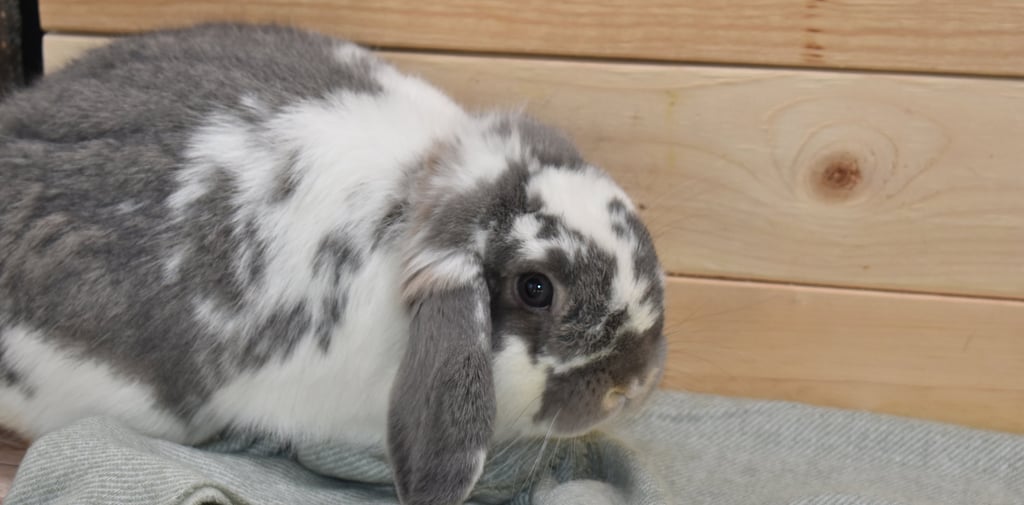
The Good, The Bad, and The Ugly: Understanding Rabbit Teeth Grinding
Rabbits grind their teeth for several different reasons, and those reasons can mean very different things. Some types of grinding are completely normal, some are signs of contentment, and one type is a clear signal that something is very wrong.
Learning the difference between these sounds can help you recognize when your rabbit is simply enjoying life and when he or she may need veterinary care.
Normal Grinding While Eating
In a healthy rabbit, teeth grinding is often heard while the rabbit is eating. Rabbits spend a great deal of time chewing and grinding their food, especially hay.
Hay requires significant chewing, and that chewing motion naturally grinds the teeth down to a healthy length. This is one of the reasons unlimited hay is such an important part of a rabbit’s diet.
If your rabbit is eating well, maintaining a healthy weight, and producing normal droppings, this type of grinding is simply part of normal digestion and dental maintenance.
Grinding Caused by Dental Problems
Sometimes teeth grinding can signal a dental issue.
If you notice that your rabbit is losing weight, eating more slowly than usual, or avoiding food altogether, dental discomfort may be the cause.
Some rabbits develop malocclusion, which means their teeth do not align properly. When this happens, the teeth may grow too long or grow in the wrong direction. Misaligned teeth can rub painfully against the inside of the mouth or even injure the surrounding tissue.
In severe cases, a misdirected tooth may begin to grow into the soft tissue of the mouth. This makes chewing extremely painful and explains why some rabbits become reluctant to eat.
Fortunately, many dental problems can be treated with veterinary care. A veterinarian may trim the teeth to a proper length or address other dental issues so the rabbit can eat comfortably again.
Providing plenty of hay, offering appropriate chew toys, and feeding a balanced diet can help prevent some dental overgrowth, although some rabbits are genetically prone to faster tooth growth and may require regular dental care.
The Happy “Purring” Grind
Rabbits sometimes grind their teeth very gently when they are completely relaxed and content.
This type of grinding often happens when a rabbit is being petted in just the right spot, especially along the jaw or cheeks. The sound is soft and rhythmic, almost like a cat’s purr.
If your rabbit is comfortably stretched out, eyes half closed, and making this quiet grinding sound while you are petting him or her, you have likely discovered one of your rabbit’s favorite spots.
This is a happy sound and nothing to worry about.
The Grinding That Signals Pain
The final type of grinding is the one no rabbit owner ever wants to hear.
When a rabbit is in severe pain, the teeth grinding becomes louder, harsher, and more forceful. This type of grinding is often accompanied by other warning signs, such as:
sitting hunched in a corner
reluctance to move
loss of appetite
a tense or withdrawn posture
If you ever hear this kind of grinding, it should be treated as a medical emergency.
Place your rabbit in a carrier and contact a rabbit-knowledgeable veterinarian immediately.
Severe grinding can be associated with serious conditions such as gastrointestinal stasis, internal blockages, liver lobe torsion, broken bones, or other painful medical problems.
Be Prepared for Emergencies
Because rabbits have an uncanny ability to develop problems late at night or when regular veterinary clinics are closed, it is wise to prepare ahead of time.
We strongly encourage all rabbit families to keep the phone numbers of at least two emergency veterinary clinics that treat exotic animals or rabbits.
If one clinic does not have a rabbit veterinarian available, another may. Knowing where to call before an emergency occurs can save valuable time.
A Difficult Topic, But an Important One
This final type of grinding is difficult to write about because it comes from painful experience. No rabbit owner wants to see their animal suffer.
Fortunately, most rabbits will never reach this point if their owners pay attention to the small changes in behavior that rabbits often show when something is wrong.
When your rabbit’s behavior feels “off,” trust your instincts and contact your veterinarian.
The goal is that the only teeth grinding you hear from your rabbit will be the gentle crunch of hay and the soft purring grind of a happy bunny.
________________________________________________________________________________________________________________
You may also find helpful:
Copyright 2016-present. All rights reserved by Hot Cross Buns Holland Lops. All images and content fall under the sole ownership of Hot Cross Buns Holland Lops.
Hot Cross Buns Holland Lops
Oberlin, Ohio
Indoor companion Holland Lops raised with care since 2016.
Email: hcbhollands@gmail.com