Rabbit Not Pooping: When Is It an Emergency?
Rabbit not pooping? It is important to know when to watch closely and when to act quickly. In this post, I explain what usually happens before droppings stop completely, why reduced hay intake often comes first, and how to recognize when veterinary care should not be delayed.
Amy Jackson & The Hot Cross Buns
3/5/20262 min read
Rabbit Not Pooping: When Is It an Emergency?
A rabbit that is not producing droppings is never something to ignore.
In most cases, the complete absence of droppings does not happen suddenly. Output often decreases first; pellets become smaller, hay intake slows, posture changes slightly to indicate discomfort.
By the time droppings stop entirely, the digestive system may already be struggling.
Knowing when to take action matters.
First; Confirm What You Are Seeing
Before assuming the worst, look carefully.
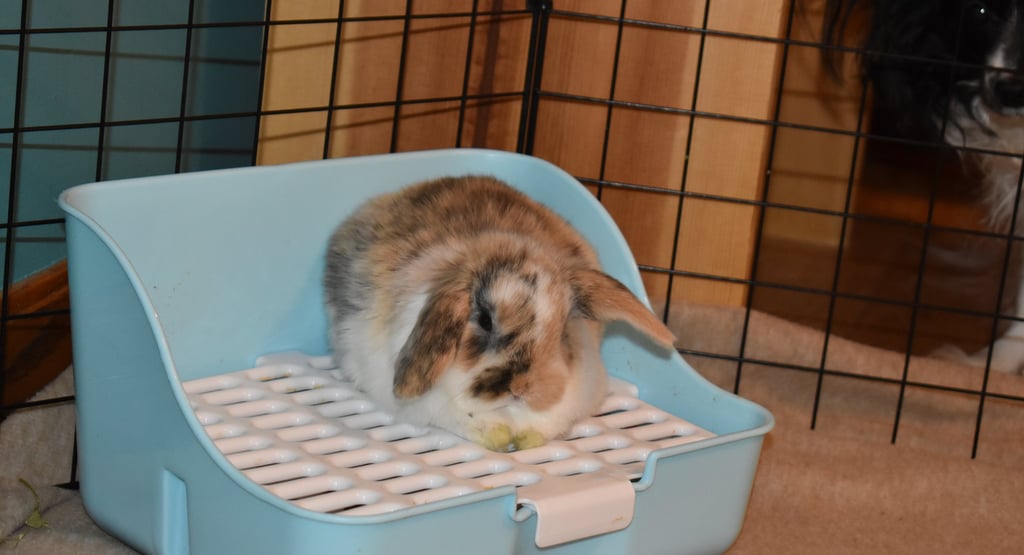
• Is the litter box truly empty?
• Are there only a few very small droppings?
• Could droppings be hidden in bedding or corners?
Sometimes output decreases before it stops completely.
If there are fewer droppings but they are still present, that is an early warning sign.
If there are no droppings at all, the situation requires immediate attention
Why Droppings Matter So Much
Rabbits rely on continuous gastrointestinal movement.
When the gut slows significantly:
• Gas builds
• Pain increases
• Appetite declines
• Dehydration worsens the cycle
The absence of droppings suggests motility (Intestinal movement) has slowed to a dangerous level.
Very often, reduced hay intake comes first. If your rabbit is eating fewer long strands of hay, smaller droppings usually follow.
That is why consistent hay consumption matters so much. You can read more about how hay protects digestive health in Hay 101.
If droppings have stopped entirely, this is not a situation to monitor overnight.
Possible Causes of No Droppings
A rabbit that is not pooping may be experiencing:
• Advanced gastrointestinal stasis (GI Stasis)
• Severe dehydration
• Intestinal obstruction
• Significant pain from another cause
• Stress related shutdown
Some of these conditions can deteriorate quickly without veterinary care.
Signs That Increase Urgency
Seek immediate veterinary care if you also observe:
• Abdominal bloating
• Severe lethargy
• Refusal to move
• Persistent tooth grinding
• Visible respiratory effort
• Cold ears or body
These are emergency level signs.
When to Escalate
If droppings have stopped entirely, do not rely on home remedies alone.
Forced feeding without ruling out an obstruction can worsen the situation.
Veterinary evaluation may include:
• Radiographs (X-rays)
• Pain management
• Fluids
• Motility medications, once obstruction is ruled out
Early intervention improves outcomes.
What Often Happens First
Complete absence of droppings is usually preceded by:
• Smaller droppings
• Fewer droppings
• Reduced hay intake
• Subtle posture changes
Relocation stress can also temporarily affect appetite and output, particularly in the first week after bringing a rabbit home. Mild decreases in droppings may occur as a rabbit adjusts to a new environment. However, complete absence of droppings is not a normal stress response. If droppings stop entirely, escalation to veterinary care is still appropriate.
That earlier window is when supportive care is most effective.
If your rabbit is still producing small droppings, that tells you the digestive tract is slowing but not completely stopped. This is the window where prompt monitoring and same day veterinary consultation can prevent progression.
If droppings stop completely, the risk to your rabbit's life increases.
A Structured Plan Makes It Easier
Emergencies are stressful; and hesitation is common.
Because rabbit health can decline quickly, I created a step by step guide called When Your Rabbit Is Sick.
It walks through early digestive slowdown, the two hour escalation window, how to recognize obstruction warning signs, and when veterinary care should not be delayed.
It is designed to reduce uncertainty, not increase alarm.
You can find it in the HCB Shoppe on this site.
Acting early is almost always safer than waiting.
________________________________________________________________________________________________________________
You may also find helpful:
Copyright 2016-present. All rights reserved by Hot Cross Buns Holland Lops. All images and content fall under the sole ownership of Hot Cross Buns Holland Lops.
Hot Cross Buns Holland Lops
Oberlin, Ohio
Indoor companion Holland Lops raised with care since 2016.
Email: hcbhollands@gmail.com