
Rabbit Litter Box Setup That Actually Works
Learn how to design a rabbit litter box setup that actually works. Simple, practical guidance to support natural habits, reduce mess, and create consistent litter use indoors.
LITTER BOX TRAINING
Amy Jackson & The Hot Cross Buns
4/21/20263 min read
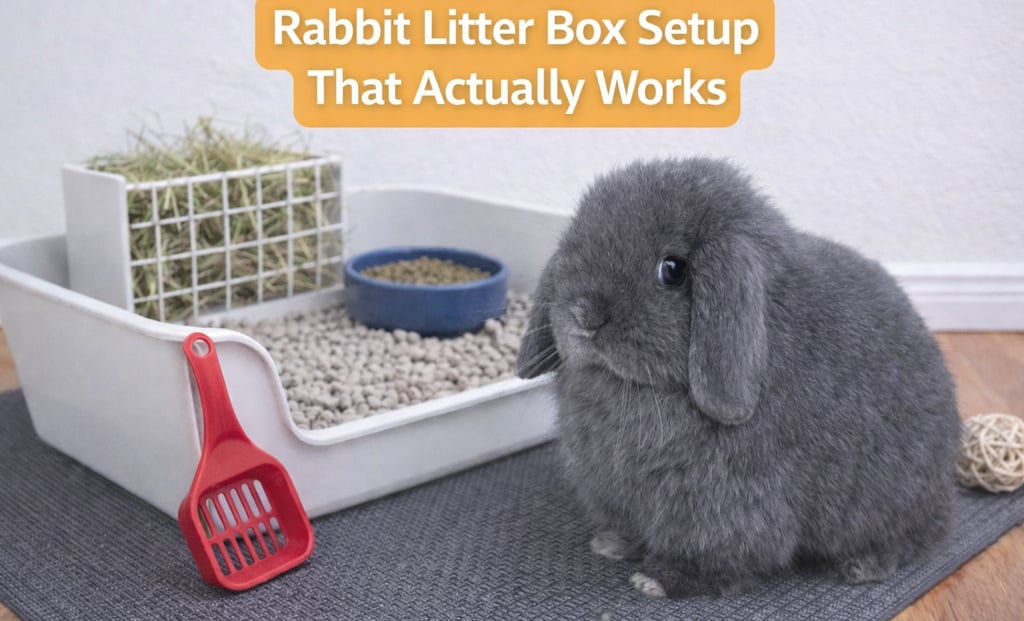
There is a point where litter habits either come together… or quietly fall apart.
A rabbit may use the box sometimes, miss it other times, or seem inconsistent in a way that feels confusing. Most of the time, it is not stubbornness or poor training. It's a setup that does not quite work for the rabbit.
A well-designed rabbit litter box setup makes use of what a rabbit already wants to do.
When that happens, everything becomes easier.
What’s Actually Happening With Litter Habits
Rabbits do not learn litter habits the way dogs or cats do. They are not trying to please anyone or follow instructions.
They follow patterns.
Most rabbits naturally choose a place to eat hay and eliminate at the same time. That behavior is consistent and predictable when the environment supports it.
When the litter box is not being used reliably, it usually means one of three things is happening:
The location does not match where the rabbit wants to go
The setup is uncomfortable or inconvenient
The space around it is creating confusion
This is normal.
The rabbit is not failing. The setup is not aligned to what Rabbits are wired to do.
Why It Matters (The Part People Miss)
Litter habits are often treated as a training issue when they are actually a design issue.
A rabbit will return to a space that feels right. If the litter area is too small, too exposed, or separate from where the rabbit eats, it becomes less useful.
Consistency matters more than correction.
This connects closely to how the overall environment is structured, which is explored more fully in What Makes a Great Rabbit Home? Creating a Safe, Happy Environment. When the space makes sense to the rabbit, behavior follows naturally.
A gentle reminder: rabbits are not trying to get it wrong.
What To Do (Practical, Real-World Guidance)
Choose the Right Litter Box
Size matters more than people expect.
The box should be large enough for the rabbit to sit fully inside
It should allow the rabbit to turn around comfortably and not hang off the edge
Low entry is helpful, especially for younger or older rabbits
A cramped litter box is one of the most common reasons for inconsistent use.
Use Safe, Absorbent Litter
Keep this simple.
Paper-based litter works well
Compressed wood pellets are good for litter boxes with grates on top
Avoid clumping or scented litters
Avoid wood shavings like pine or cedar
Eco-friendly options include making or purchasing washable litter box liners (This is what we do at HCB.)
The goal is absorbency without irritation.
Add Hay Where It Belongs
This is the part most people miss.
Place hay directly in the litter box or immediately next to or above it.
Rabbits naturally eat and eliminate at the same time. When hay is separated from the litter box, the rabbit will often choose the hay area instead.
When hay and litter are combined, habits become much more consistent.
Rabbit wisdom: where the hay is, the rabbit will go.
Put the Litter Box Where the Rabbit Already Chooses
Do not overthink placement.
Watch where the rabbit is already going and place the litter box there.
If the enclosure is large, you may need more than one box at first. Over time, as habits settle, you can simplify.
Trying to force a location rarely works. Working with the rabbit almost always does.
Keep the Setup Stable
Once the rabbit begins using the litter box consistently:
Avoid moving it unnecessarily
Keep the layout predictable
Clean it regularly, but do not remove all scent at once
Familiar scent helps reinforce the habit.
Understand the Role of Spaying and Neutering
Hormones affect litter habits more than many people expect.
Unaltered rabbits are more likely to:
Mark territory
Scatter droppings
Show inconsistent habits
Spaying or neutering brings stability to both behavior and litter use over time.
What To Watch For
Even with a good setup, small changes can happen.
Watch for:
Sudden changes in litter habits
Choosing a new corner consistently
Sitting outside the box while eliminating
Reduced use of the litter area
These are usually signs that something in the setup has shifted.
This is normal.
Sometimes it is as simple as adjusting location or cleaning frequency. Other times, it may point to stress or a health concern.
Closing
A litter box that works does not rely on correction or constant attention.
It fits naturally into how a rabbit already behaves.
When the size is right, the location makes sense, and hay is part of the setup, most rabbits become consistent without pressure.
That is the goal.
You May Also Find Helpful
As you continue refining your rabbit’s daily care, these can help you see how different pieces of the environment work together:
Copyright 2016-present. All rights reserved by Hot Cross Buns Holland Lops. All images and content fall under the sole ownership of Hot Cross Buns Holland Lops.
Hot Cross Buns Holland Lops
Oberlin, Ohio
Indoor companion Holland Lops raised with care since 2016.
Email: hcbhollands@gmail.com