
Selecting a Litter Box for Your Rabbit
Learn how to choose the best litter box for your rabbit, including size, style, placement, safe litter materials, and setup tips that support natural habits and easier litter training.
Amy Jackson & The Hot Cross Buns
5/25/20264 min read
Selecting a Litter Box for Your Rabbit
Where Good Habits Begin
Litter training a rabbit is often easier than people expect, but the setup matters more than the rabbit.
A well-chosen litter box supports what rabbits already want to do. A poor setup creates confusion, mess, and frustration. Before assuming a rabbit “isn’t getting it,” it is worth looking closely at the box itself.
Size Matters More Than People Realize
One of the most common issues is using a litter box that is too small.
A rabbit should be able to sit comfortably, turn around, and relax without hanging over the edge. Many rabbits prefer to eat hay while using the litter box, so there needs to be room for both their body and a generous pile of hay.
If the space feels cramped, they will often choose somewhere else to go.
Choosing a Style That Works
There are several different litter box styles available, and not every rabbit will prefer the same setup.
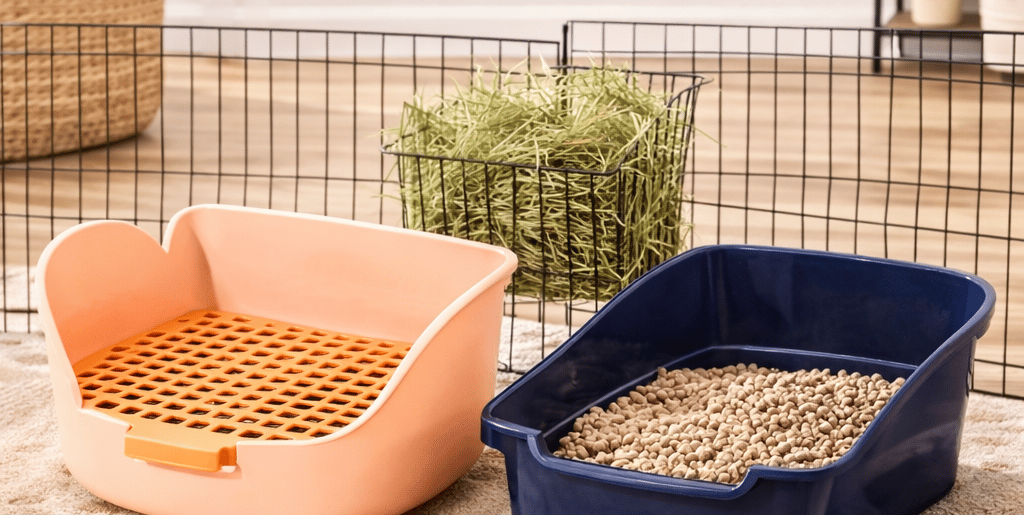
At Hot Cross Buns, we tend to use larger litter boxes with a wide plastic grate. These provide a more supportive surface for a rabbit’s weight and help keep them out of damp litter, which makes a noticeable difference in both comfort and cleanliness.
Some rabbits do better with a more traditional cat litter box. In those cases, a box with higher sides helps contain mess, while a lowered entry point allows the rabbit to step in easily without hesitation.
Plastic is the most common material, but it does have its limitations. It stains over time and will not stay looking clean without consistent maintenance. Daily cleaning makes a significant difference.
Stainless steel litter boxes are becoming more available and may be a good long-term option. They tend to resist staining and odor buildup better than plastic and are easier to keep looking clean.
In the end, the best style is the one your rabbit uses comfortably and consistently.
High Sides and Easy Entry
Containment and accessibility both matter.
Higher sides help keep hay and droppings inside the box, reducing daily cleanup. At the same time, at least one side should be low enough for easy entry, especially for younger or older rabbits.
If getting into the box feels awkward, many rabbits will simply avoid it.
Placement Matters More Than Training
Rabbits tend to choose their bathroom area.
Working with that instinct is far more effective than trying to override it. If a rabbit consistently uses a particular corner, placing the litter box there usually solves the problem.
Trying to force a different location often leads to ongoing accidents.
Hay and the Litter Box Go Together
Most rabbits prefer to eat and use the litter box at the same time.
This works in your favor. Providing fresh hay directly in or just above the litter box in a hay rack encourages consistent use and keeps everything happening in one place.
A rabbit who has to leave the box to find hay is less likely to use the litter box consistently.
Choosing the Right Litter Material
The material inside the box matters just as much as the box itself.
Safe options include paper-based litter and compressed wood pellets. These are absorbent, low in dust, and safe for rabbits who may ingest small amounts.
Wood shavings are not a good choice. They aren't absorbent, and some types (such as pine or cedar) can release compounds that are not safe for rabbits to inhale.
Clay litters, clumping litters, and heavily scented products should also be avoided.
For those looking for a more sustainable option, fleece liners can work well. Each liner can be made by cutting two pieces of fleece to fit the litter box and sewing them together to create a simple, reusable pad.
The liner is placed in the box, shaken off daily, and washed for reuse. We change ours each day, which allows us to keep the space clean and also makes it easier to monitor urine output and the size and quality of droppings.
Having several liners on hand for each litter box helps ensure you always have a clean one ready while the others are being washed. When used in a setup that keeps the rabbit comfortably above any moisture, fleece can be a practical and eco-friendly alternative.
Because rabbits spend a significant amount of time in their litter boxes, whatever material you choose should be safe, comfortable, and easy to keep clean.
When the Setup Is the Problem
If a rabbit is not using the litter box consistently, the setup is often the issue.
A box that is too small, poorly placed, difficult to enter, or not paired with hay can all lead to inconsistent habits. In many cases, adjusting these factors resolves the problem without the need for retraining.
Rabbits are naturally inclined to use a designated area. The goal is to make that area the easiest and most comfortable option.
If you are still working through litter habits, you may find it helpful to read more about how setup and routine work together in our post on How to Litter Train a Rabbit.
You can also see the litter boxes and setups we use in our own rabbitry on our Bunny Care Supplies page.
A Simple Standard
A good litter box is large, easy to enter, placed where the rabbit already prefers to go, and paired with fresh hay.
When those pieces are in place, most rabbits fall into consistent habits with very little effort.
Copyright 2016-present. All rights reserved by Hot Cross Buns Holland Lops. All images and content fall under the sole ownership of Hot Cross Buns Holland Lops.
Hot Cross Buns Holland Lops
Oberlin, Ohio
Indoor companion Holland Lops raised with care since 2016.
Email: hcbhollands@gmail.com