
Best Flooring Options for Rabbits
Discover the best flooring options for rabbits, including durable, easy-to-clean surfaces with proper traction to support comfort, safety, cleanliness, and daily care.
Amy Jackson & The Hot Cross Buns
4/23/20263 min read
Best Flooring Options for Rabbits
Choosing the right flooring for a rabbit is not simply a matter of appearance. It shapes how safely a rabbit moves, how easily the space can be maintained, and how comfortable daily life feels over time. Flooring influences joint health, confidence, litter habits, and even how willingly a rabbit explores its environment. A surface that looks attractive but lacks traction or durability will quietly create problems that build over weeks and months.
A good flooring choice balances three things: durability, traction, and ease of cleaning. When those elements are in place, everything else becomes simpler.
What Actually Matters in Rabbit Flooring
Rabbits are not designed to live on slick or unstable surfaces. Their hind legs generate powerful force, and without proper grip, that force turns into slipping instead of movement. Over time, this leads to hesitation, reduced activity, and strain on joints.
Durability matters just as much. Rabbits dig, chew, and revisit the same areas repeatedly. A surface that breaks down quickly becomes both a hygiene issue and a safety concern.
Cleaning is the third piece that cannot be ignored. Rabbits are generally clean animals, but accidents happen, especially during transitions or hormonal phases. Flooring must allow for daily maintenance without absorbing odor or harboring bacteria.
Flooring Options That Work Well
Some materials consistently perform better because they meet all three requirements.
Luxury vinyl plank (LVP) is one of the most reliable options for a rabbit space. It offers water resistance, strong durability, and a slightly textured surface that provides better traction than traditional vinyl. It also cleans easily with routine sweeping and occasional wiping. For homes with elderly dogs or other animals, this becomes especially valuable since it handles accidents without damage.
Sealed laminate flooring can work when properly installed and protected, though it is less forgiving than LVP. It resists wear reasonably well, but moisture is its weak point. If used, it should be paired with rugs or mats in high-use areas to prevent slipping and to protect seams.
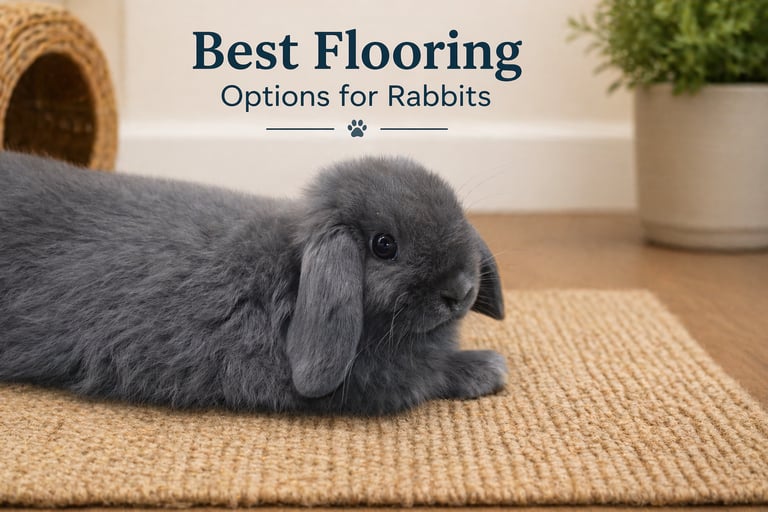
Low-pile rugs and washable mats are often used in combination with harder surfaces. They provide the traction rabbits need to feel secure while moving, resting, and turning quickly. Washable options are particularly helpful because they allow you to maintain hygiene without replacing materials frequently.
Foam mats (interlocking exercise mats) can be useful in certain setups, especially for younger rabbits or temporary spaces. They offer cushioning and grip, but they are vulnerable to digging and chewing and can degrade over time. They are best used thoughtfully and monitored closely.
Flooring That Creates Problems
Some surfaces consistently lead to issues, even if they appear convenient at first.
Hardwood floors, while beautiful, are easily damaged by moisture and scratching. They also tend to be slippery unless heavily covered, which may defeat their purpose.
Tile flooring is durable but often too slick and too cold. Rabbits may avoid moving confidently across it, especially in open areas.
Carpet, particularly wall-to-wall carpet, absorbs odors and stains quickly. It becomes difficult to clean thoroughly and can encourage digging or chewing behaviors that damage both the flooring and the rabbit’s good habits.
Creating a Functional Setup
Most successful rabbit homes use a layered approach rather than relying on a single material. A durable base floor paired with strategically placed rugs or mats creates a balance between cleanliness and comfort.
Place traction where it matters most. Areas around the litter box, feeding station, and resting spaces should feel stable underfoot. Pathways between these areas should allow the rabbit to move without hesitation. When a rabbit feels secure in its footing, behavior improves naturally. Confidence shows up in movement, posture, and willingness to interact.
Noise and activity levels in the room also influence how flooring is experienced. A quiet corner with stable footing will always feel safer than a slick surface in the center of a busy space. The goal is not just a clean floor, but a space that supports calm, predictable movement.
A Practical Perspective
It's easy to overthink flooring choices or to be drawn toward what looks best in a photo. In practice, the most successful setups are the ones that hold up to daily life without constant adjustment.
A rabbit does not need a perfect space. It needs a stable one. When the flooring supports natural movement, stays clean without much effort, and holds up over time, enjoying the rabbit becomes the central focus.
________________________________________________________________________________________________________________
Suggestions for Further Reading:
Copyright 2016-present. All rights reserved by Hot Cross Buns Holland Lops. All images and content fall under the sole ownership of Hot Cross Buns Holland Lops.
Hot Cross Buns Holland Lops
Oberlin, Ohio
Indoor companion Holland Lops raised with care since 2016.
Email: hcbhollands@gmail.com