Why We Spay and Neuter Rabbits Before Placement
Learn why we spay and neuter rabbits before placement, including the health benefits, behavior improvements, and long-term well-being. Our rabbits who are placed at 6+ months are safely seen through their spay/neuter prior to placement for their well-being.
Amy Jackson & The Hot Cross Buns
10/2/20243 min read
Why We Spay and Neuter Our Rabbits Before Placement
A Decision Rooted in Care and Responsibility
We are occasionally asked why we spay or neuter all of the rabbits we retire or remove from our breeding program.
The answer is both simple and deeply important.
We want every rabbit who leaves our care to begin their next chapter as healthy, stable, and well-prepared as possible. This begins with addressing the risks that are common, but often unseen.
Protecting Against a Common and Serious Risk
One of the primary reasons we spay our does is to protect them from reproductive cancer.
This is not a rare concern. In unspayed female rabbits, cancer of the reproductive system is sadly common and often develops earlier than many people expect.
This became very real for us when we lost a two-year-old doe during what was meant to be a routine spay. She had been tentatively matched with a home in New York and we wanted to see her through her spay and recovery prior to placement. Cancer was discovered during the procedure, and she was not able to recover.
That experience shaped how we move forward.
We never want a family to bring home a rabbit, only to learn at their first veterinary visit that their new pet is already facing a serious and life-limiting condition. Instead, we take on that responsibility ourselves. We accept the emotional and financial risk so that the rabbits we place have already been given that protection.
Supporting Behavior and Long-Term Stability
Neutering our bucks is primarily about creating a stable and successful home life.
Hormonal behaviors such as urine spraying and territorial marking can make living with an intact buck challenging. These behaviors are not a reflection of temperament, but of biology.
We have experienced this firsthand, and it is not something most families are prepared to manage long-term. When these behaviors persist, it can place strain on the home and, in some cases, lead to rabbits being rehomed or surrendered.
By neutering our bucks, we greatly reduce these behaviors and help ensure that placements remain successful. Many rabbits also become more settled and predictable once hormones are no longer driving their actions.
Some may go through a short adjustment period as their hormone levels diminish, but they typically return to a steady and comfortable baseline.
Allowing for Meaningful Companionship
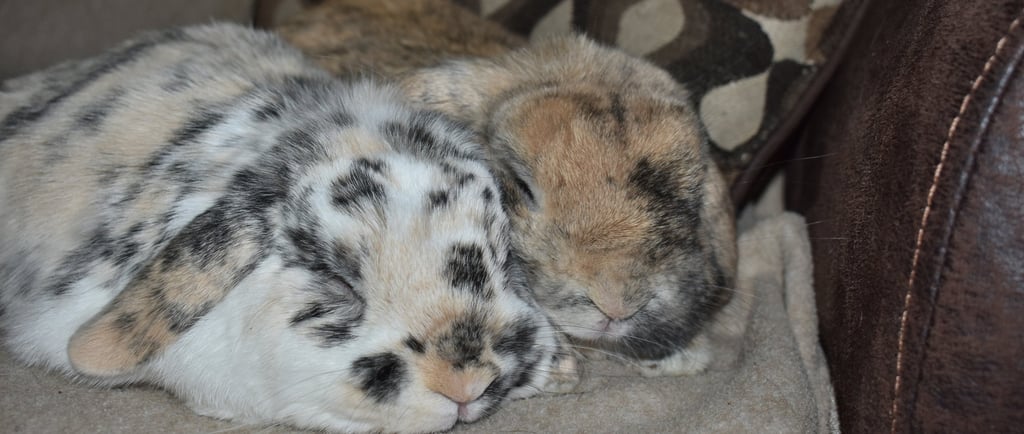
Spayed and neutered rabbits are able to safely enjoy companionship with another rabbit.
A bonded pair offers a level of interaction and connection that humans alone cannot fully provide. Rabbits groom one another, rest together, and share a quiet sense of presence that enriches their daily lives.
We find great joy in receiving updates from families and seeing our rabbits settled into homes where they are not only loved, but also deeply connected to a companion.
Bonding itself is a process that requires time and patience, but the result is often a more fulfilled and balanced rabbit.
Preparing Each Rabbit for the Life Ahead
Every rabbit that leaves Hot Cross Buns has been part of our daily life.
We know their personalities, their habits, and their individual needs. Spaying and neutering is part of preparing them for a future where they can thrive, not just adapt.
This decision reflects how much we value their long-term well-being and the success of the homes they enter.
A Commitment That Continues Beyond Our Home
We love each and every one of the rabbits we raise.
Spaying and neutering is not simply a procedure. It's part of a broader commitment to their health, their comfort, and their future, allowing us to send them into their new homes with confidence, knowing they have been given the strongest possible start.
***
Considering adding a rabbit to your life? You may find these posts helpful.
Copyright 2016-present. All rights reserved by Hot Cross Buns Holland Lops. All images and content fall under the sole ownership of Hot Cross Buns Holland Lops.
Hot Cross Buns Holland Lops
Oberlin, Ohio
Indoor companion Holland Lops raised with care since 2016.
Email: hcbhollands@gmail.com