
Why Is My Rabbit Hiding More Than Normal?
Are you wondering, "Why is my rabbit hiding more than usual?" Learn common causes, including stress, environment changes, and signs of illness, which may lead to an immediate trip to the vet
Amy Jackson & The Hot Cross Buns
5/18/20262 min read
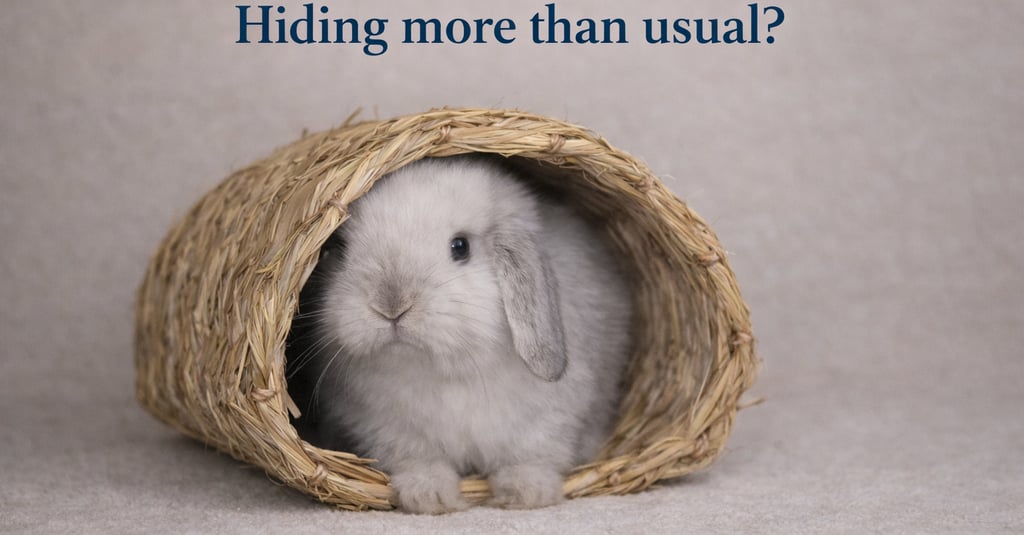
Why Is My Rabbit Hiding More Than Normal?
When a Quiet Change Stands Out
Rabbits naturally spend time in sheltered spaces. Resting under furniture, tucking into a corner, or retreating to a familiar hideaway is part of how they feel safe.
When that behavior increases or begins to feel different, it tends to stand out. A rabbit who once moved freely may begin staying hidden for longer periods, avoiding interaction, or hesitating to come out at all.
This kind of change is worth paying attention to. It often reflects something shifting beneath the surface.
A Natural Response to Feeling Unsafe
Hiding is one of the most instinctive ways a rabbit protects themselves.
When something in their environment feels uncertain, they respond by becoming less visible. Loud sounds, sudden movement, unfamiliar people, or the presence of another animal can all trigger that response.
Even small changes can have an impact. A rearranged room, a new item in their space, or the introduction of another pet can make a familiar environment feel different. In these moments, a rabbit may need a day or two to recognize that the overall rhythm of their world remains the same.
The presence of a new person in the home can have a similar effect. A different voice, a louder or more animated way of moving, unfamiliar scents such as perfume, or even heavier footsteps can all disrupt a rabbit’s sense of what is normal.
Given a little time, most rabbits adjust and begin to feel comfortable again. Some, however, remain cautious around certain individuals. Rabbits are observant and discerning animals, and their reactions can be surprisingly consistent. If a rabbit continues to stay hidden during a particular person’s visits, it may simply reflect that they do not feel at ease in that presence.
With time and consistency, most rabbits return to their usual patterns of relaxed, confident behavior.
When Hiding Reflects Pain or Illness
Hiding is not always emotional. It can also be a sign that a rabbit is not feeling well.
Rabbits instinctively conceal pain, which makes these changes especially important to notice. A rabbit who is hunched, reluctant to move, or grinding their teeth may be experiencing significant discomfort.
While it is normal for a rabbit in pain to withdraw, they should never be left alone to suffer. These signs call for immediate attention. Observant rabbit owners recognize these subtle shifts and seek veterinary care without delay.
When hiding is paired with reduced appetite, smaller droppings, or changes in posture, a medical cause should be considered right away.
Creating a Sense of Safety Again
A calm, predictable environment helps a rabbit regain confidence.
Gentle movement, consistent routines, and allowing your rabbit to approach on their own terms all support a return to normal behavior. Giving them space to observe without pressure allows trust to rebuild naturally.
If hiding continues or is paired with other concerning signs, reaching out to a rabbit-savvy veterinarian ensures that nothing is being overlooked.
Listening to What the Behavior Means
A rabbit who hides more than usual is not withdrawing without reason.
They are responding to something they feel, whether it is environmental, emotional, or physical. Paying attention to that change allows you to respond thoughtfully and support them in a way that restores both comfort and confidence.
Copyright 2016-present. All rights reserved by Hot Cross Buns Holland Lops. All images and content fall under the sole ownership of Hot Cross Buns Holland Lops.
Hot Cross Buns Holland Lops
Oberlin, Ohio
Indoor companion Holland Lops raised with care since 2016.
Email: hcbhollands@gmail.com