Why Do Rabbits Hide Illness?
Why do rabbits hide illness? Learn how prey instincts affect behavior, the subtle early signs to watch for, and why acting quickly can protect your rabbit’s health.
Amy Jackson & The Hot Cross Buns
4/28/20262 min read
Why Do Rabbits Hide Illness?
When Something Feels Off, but You Can’t Quite See Why
One of the most challenging parts of caring for a rabbit is this:
By the time something looks clearly wrong, it often already is.
Rabbits do not usually show illness in obvious ways. They continue eating, moving, and interacting as normally as they can, even when something is beginning to shift internally.
Because of that, the earliest signs are often easy to miss.
A Survival Instinct That Has Never Left Them
Rabbits are prey animals.
In the wild, survival depends on not appearing weak. A rabbit that shows signs of illness becomes an easy target. Because of this, rabbits have evolved to mask vulnerability as much as possible.
That instinct does not disappear in a safe home.
Even when there are no predators, a rabbit’s natural response is to remain quiet and composed, concealing discomfort until it can no longer be hidden.
What Hiding Illness Looks Like at Home
Hiding illness does not mean a rabbit shows no signs at all.
It means the signs are often subtle.
You may notice:
• Slightly reduced hay intake
• Smaller or fewer droppings
• A quieter demeanor
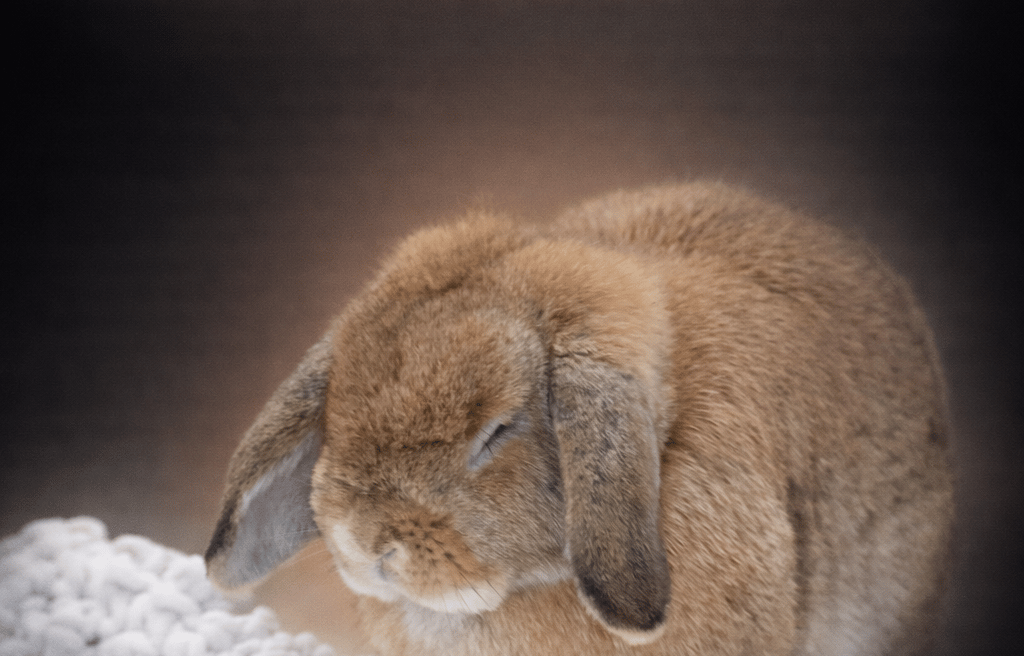
• A change in posture, often more hunched
• Less interest in interaction
These changes are easy to overlook, especially if the rabbit is still eating or moving around.
However, these are often the earliest indicators that something is not right.
Why Waiting for Obvious Symptoms Is Risky
Many people expect illness to look dramatic.
In rabbits, it rarely does at first.
A rabbit who is clearly lethargic, refusing all food, or unable to move comfortably is often already in an advanced stage of illness. At that point, intervention becomes more urgent and more complex.
Waiting for unmistakable signs can mean losing valuable time.
The Role of Daily Observation
Because rabbits hide illness, consistent observation becomes one of the most important parts of their care.
This does not mean watching constantly or becoming anxious over every small change. It means becoming familiar with what is normal for your rabbit.
How much hay they eat.
What their droppings typically look like.
How they move and rest throughout the day.
When something shifts, even slightly, it becomes noticeable.
Trusting Subtle Changes
One of the most valuable skills a rabbit owner can develop is trusting small observations.
If something feels off, even if you cannot immediately explain why, it is worth paying attention.
Early changes are often the only warning a rabbit will give.
Responding at that stage allows for simpler, more effective care than waiting for a more obvious decline.
A Different Way of Seeing Health
Caring for a rabbit requires a different mindset than caring for many other animals.
Health is not always defined by obvious symptoms but is reflected in routines, habits, and small quirky behaviors.
When you begin to notice those patterns, you are better able to protect your rabbit from the quiet progression of illness.
Copyright 2016-present. All rights reserved by Hot Cross Buns Holland Lops. All images and content fall under the sole ownership of Hot Cross Buns Holland Lops.
Hot Cross Buns Holland Lops
Oberlin, Ohio
Indoor companion Holland Lops raised with care since 2016.
Email: hcbhollands@gmail.com