
Rabbit Carrier: How to Choose the Right One
Learn how to choose the best rabbit carrier for safe travel, including sizing, hard vs soft options, and practical tips to keep your rabbit secure and comfortable.
Amy Jackson & The Hot Cross Buns
6/18/20263 min read

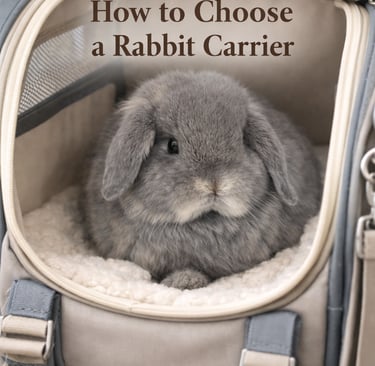
Choosing the Right Carrier for Your Rabbit
Every rabbit owner will need a carrier.
Whether you are bringing your rabbit home for the first time or heading to a veterinary appointment, a well-chosen carrier is essential. It keeps your rabbit secure, prevents injury during transport, and provides a contained space in unfamiliar situations.
Choosing the right carrier from the beginning makes every trip easier and safer for both you and your rabbit.
What a carrier is really for
A carrier is more than a way to move your rabbit from one place to another.
It provides protection during transport, limits movement that could lead to injury, and creates a defined space where your rabbit can feel more secure. In unfamiliar environments, that sense of containment can make a significant difference in how a rabbit responds.
A poorly chosen carrier can lead to slipping, chewing, escape attempts, or unnecessary stress. A well-chosen one supports stability and safety from the moment your rabbit is placed inside.
Hard-sided vs. soft-sided carriers
There are two main types of carriers, and each has its place.
Hard-sided carriers are our preferred option.
They are sturdy, secure, difficult for rabbits to chew through, and easy to clean. They also provide better protection during car travel. We recommend choosing a model with two doors, one in the front and one on the top. A top-opening door allows you to gently lift your rabbit in and out, rather than guiding them through a front opening, which can feel stressful for many rabbits.
Soft-sided carriers are often chosen for their lighter weight and portability.
They can work well, especially for calm rabbits or shorter trips. Many families prefer them for convenience, and they can be a suitable option in the right situation. It is important to understand their limitations. A rabbit who enjoys digging or chewing can damage a fabric carrier quickly, and mesh panels or zippers may not hold up under stress.
A rabbit who is unfamiliar with travel or easily unsettled may be more likely to test the edges of a soft carrier, which makes durability especially important.
Choosing the right size
Size matters more than many people expect.
A carrier should be large enough for your rabbit to turn around comfortably and tall enough for them to sit upright without their ears being pressed down (not a problem for Lop breeds). At the same time, it should not be so large that your rabbit slides or feels unstable during transport.
For most Holland Lop homes, a carrier designed for a medium to large cat will be appropriate and will continue to work as your rabbit reaches full size.
Choosing a size that will work long-term avoids the need to replace it later.
Setting up the carrier properly
A carrier should not be left empty inside.
To create a safe and comfortable space, place a towel, fleece, or other non-slip surface on the bottom. This prevents sliding and helps your rabbit feel secure.
Adding a small amount of hay can provide both comfort and familiarity. For most trips, hay is more practical than bowls or additional accessories.
The goal is a stable, simple setup that allows your rabbit to settle rather than react.
Carriers for longer travel
For families who plan to travel more frequently or over longer distances, a slightly different setup may be helpful.
Some choose expandable soft-sided carriers that open into multiple sections. These can allow space for a small travel litter box, a water bowl, and room to stretch.
These setups can work well when supervised and used in controlled environments. They are generally better suited for calm rabbits and planned travel, rather than quick trips or situations where stability and containment are the priority.
A final thought
Rabbits respond to travel in different ways.
Some are unsettled by movement and unfamiliar surroundings. Others adapt over time as routines become familiar. A few seem to genuinely enjoy the experience and become curious, alert companions on the road.
A well-chosen carrier supports all of these responses. It provides stability, security, and a familiar space, whether your rabbit is cautious or confident.
Taking the time to choose thoughtfully now makes future travel, whether it is a routine veterinary visit or a longer trip, simpler and more manageable for both of you.
Copyright 2016-present. All rights reserved by Hot Cross Buns Holland Lops. All images and content fall under the sole ownership of Hot Cross Buns Holland Lops.
Hot Cross Buns Holland Lops
Oberlin, Ohio
Indoor companion Holland Lops raised with care since 2016.
Email: hcbhollands@gmail.com