Male vs Female Rabbits: Are There Real Personality Differences?
Male or female rabbit? Learn how gender influences behavior, why spaying and neutering matter, and why individual temperament is more important than sex when choosing a pet rabbit.
Amy Jackson & The Hot Cross Buns
3/27/20262 min read
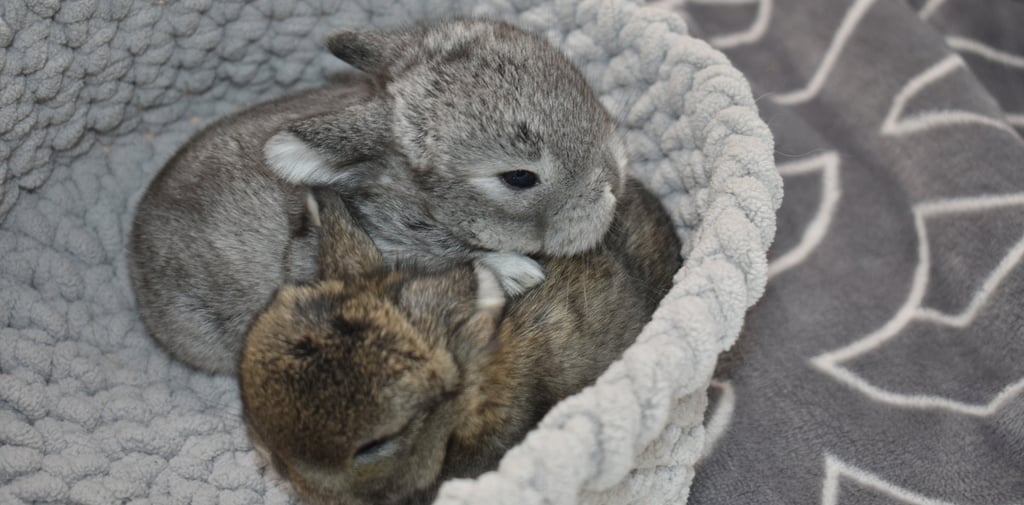
One of the most common questions prospective rabbit owners ask is whether male or female rabbits have better personalities. It is a reasonable question. Families want to make thoughtful decisions, and they hope that choosing one gender over the other might guarantee a smoother experience.
The honest answer is that personality varies far more by individual temperament and early handling than by gender alone. There are some general tendencies influenced by hormones, but no sex guarantees a particular disposition.
The Role of Hormones
Before spaying or neutering, hormones influence behavior significantly.
Unaltered male rabbits may be more prone to spraying, mounting, or territorial marking. Unaltered females may show nesting behavior, digging, or increased territorial defensiveness, particularly as they mature.
These behaviors are not flaws. They are biologically driven instincts. When people describe a young rabbit as “moody” or “difficult,” it is often a reflection of normal hormonal development rather than personality.
After spaying or neutering, many of these hormone-driven behaviors decrease substantially. The behavioral gap between males and females narrows considerably once they are altered.
Spaying also significantly reduces the risk of uterine cancer in females, which is an important health consideration independent of temperament.
Commonly Observed Tendencies
Neutered males are often described as social, curious, and affectionate. Spayed females are often described as confident, intelligent, and independent.
However, these are broad patterns, not rules.
I have seen outgoing, affectionate females and reserved, observant males. I have also seen energetic males and equally energetic females. Within a single litter, personalities can vary widely regardless of sex.
Gender may influence tendencies, but it does not define character.
Temperament Is Individual
Within the same litter, you may see one rabbit who boldly approaches every new situation, another who pauses and evaluates before engaging, and another who is constantly in motion and eager to explore.
None of those traits are inherently better or worse.
An energetic rabbit may thrive in a lively household with older children. A quieter rabbit may be a better fit for a calm home that values gentle interaction. A cautious rabbit may form deep bonds once trust is established. A bold rabbit may adjust quickly to change.
The goal is not to choose the calmest rabbit. The goal is to choose a rabbit whose natural temperament aligns with your household’s rhythm and expectations.
Gender provides very little insight into that match.
Observation over time provides much more.
What Truly Matters
If you are deciding between a male and female rabbit, focus on:
• The individual rabbit’s response to gentle handling
• Confidence in new environments
• Curiosity versus hesitation
• Activity level
• How the rabbit recovers from mild stress
These traits are shaped by genetics, early socialization, and environment far more than by sex alone.
Color and gender are visible traits. Temperament requires careful observation.
A Balanced Perspective
When rabbits are properly housed, fed a hay-based diet, and spayed or neutered at the appropriate time, both males and females can become steady, engaging companions.
Instead of asking which gender is nicer, it is more helpful to ask which individual rabbit feels like the right fit for your home.
A playful rabbit is not less desirable than a reserved one. A shy rabbit is not less worthy than a bold one. Each simply requires a family willing to understand and respect who they are.
Gender can influence certain tendencies, especially before spaying or neutering, but it does not determine what kind of companion the rabbit will become. The relationship you build will depend far more on temperament, environment, and consistency than on whether your rabbit is male or female.
________________________________________________________________________________________________________________
You may also find helpful:
Copyright 2016-present. All rights reserved by Hot Cross Buns Holland Lops. All images and content fall under the sole ownership of Hot Cross Buns Holland Lops.
Hot Cross Buns Holland Lops
Oberlin, Ohio
Indoor companion Holland Lops raised with care since 2016.
Email: hcbhollands@gmail.com