
How to Safely Hold a Rabbit Without Causing Stress
Learn how to safely hold a rabbit without causing stress, including providing proper support, handling techniques, and low-stress alternatives like carrier training.
Amy Jackson & The Hot Cross Buns
5/11/20264 min read
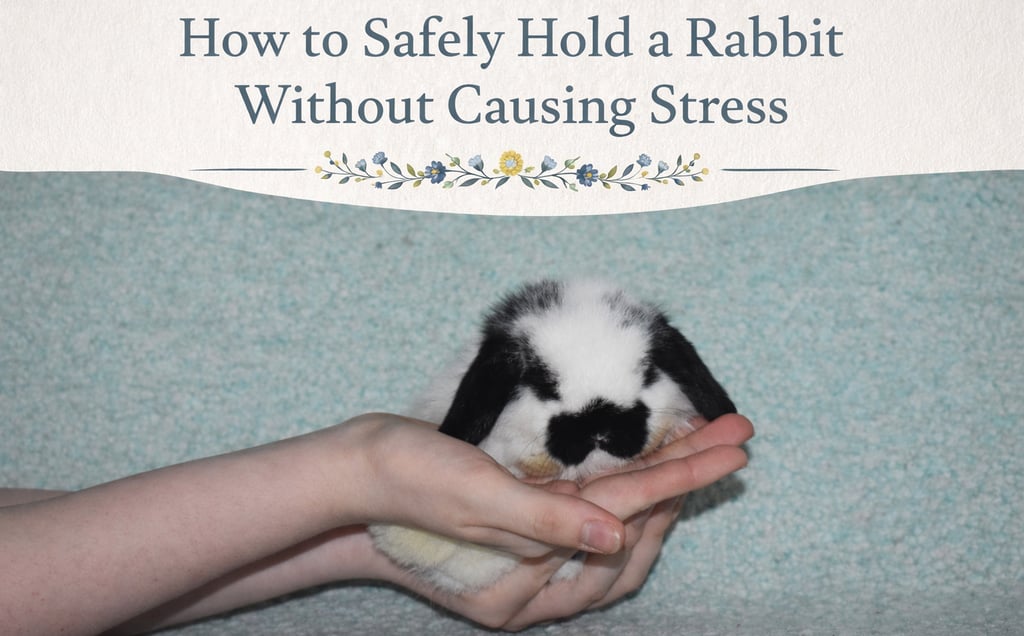
How to Safely Hold a Rabbit Without Causing Stress
Understanding Why Holding Feels Different to a Rabbit
Holding a rabbit is often one of the first ways people expect to connect with them. It feels natural to want to pick them up, bring them close, and offer affection.
For a rabbit, the experience is very different.
Rabbits are prey animals. Being lifted off the ground can feel like being captured, even when done gently. Their instinct is not to relax into that moment, but to brace, tense, or try to escape.
Understanding this difference is the first step in learning how to handle a rabbit safely.
When Holding Is Necessary and When It Is Not
Not every interaction needs to involve picking a rabbit up.
In many cases, connection is better built on the ground. Sitting beside your rabbit, allowing them to approach, and interacting at their level creates a sense of safety that holding cannot provide.
There are times, however, when holding becomes necessary. Health checks, nail trims, transport, or moving a rabbit out of an unsafe situation all require handling.
Approaching those moments with intention makes a meaningful difference in how the rabbit experiences them.
A Steady and Supportive Way to Lift a Rabbit
Approaching a rabbit in a predictable way can help reduce stress.
Allowing your hand to come into their view first gives them a moment to recognize your presence. Many rabbits will pause to sniff, which softens the start of the interaction. From there, the movement into a lift can happen smoothly rather than suddenly.
Supporting the front of the body just behind the front legs, then immediately securing the hindquarters, creates balance. Bringing the rabbit firmly against your chest adds a sense of containment that many rabbits respond to more calmly than being held away from the body.
A rabbit should never be picked up by the ears or the scruff. These methods are painful, frightening, and can cause severe injury. Proper support through the body is what allows a rabbit to feel secure.
This approach does not eliminate all movement. Some rabbits will still kick or try to reposition themselves. Holding securely, without squeezing, helps prevent sudden twisting or launching that can lead to injury.
The goal is not to restrain forcefully, but to prevent instability. A rabbit who feels supported is less likely to panic than one who feels they might fall.
Moving Calmly and Recognizing Stress
How a rabbit is picked up matters just as much as how they are held.
Slow, deliberate movement allows the rabbit to process what is happening. Reaching quickly, lifting abruptly, or adjusting your grip mid-hold can increase stress and trigger a struggle response.
A rabbit will often show signs of discomfort before attempting to escape. Tension in the body, wide eyes, rapid breathing, or sudden stillness can all indicate that the rabbit is not comfortable.
If a rabbit begins to struggle, lowering them safely to a secure surface as soon as possible helps prevent injury.
A Calm Approach for Rabbits Who Avoid Being Picked Up
Some rabbits will move away quickly when they sense they are about to be picked up. This is not stubbornness, it's instinct.
In these situations, chasing a rabbit usually increases stress and makes the experience more difficult. A more thoughtful approach is to slow the moment down and reduce the need for pursuit.
When handling is necessary, a soft towel can be used as a gentle barrier. Placing the towel calmly over the rabbit’s body can create a brief pause, allowing you to lift them safely with full support.
The towel can also provide a sense of containment once the rabbit is held, helping reduce sudden movement and protecting both the rabbit and your hands.
This approach should be used with care. The goal is not to startle or corner the rabbit, but to make a necessary moment of handling as calm and brief as possible.
Using a Carrier as a Low-Stress Alternative
For rabbits who are especially nervous, training them to enter a carrier on their own can be a gentler way to move them from one place to another.
The carrier can be introduced as a safe and familiar space rather than something associated only with travel or stress. Leaving it accessible in their area and allowing the rabbit to explore it at their own pace helps build that association.
Inviting the rabbit into the carrier with a small favorite treat or a familiar toy creates a positive connection. Over time, many rabbits will begin to enter willingly, especially when the experience is predictable and calm.
This approach avoids the need for lifting altogether in certain situations, making transitions easier for rabbits who are easily overwhelmed by handling.
Building Trust Beyond Being Held
For many rabbits, being held will never feel fully natural.
That does not mean they cannot form a strong bond. Trust is built through consistent, gentle interaction at their level rather than through frequent lifting.
Over time, some rabbits become more tolerant of handling when it is predictable and brief. Others remain uncomfortable, and that preference should be respected.
A rabbit who feels safe in your presence does not need to be held in order to feel connected.
A Calm Approach Creates a Safer Experience
Handling a rabbit safely is less about technique alone and more about understanding.
When you recognize how a rabbit experiences being lifted, your approach becomes more thoughtful. Movements become slower, support becomes more intentional, and the focus shifts from holding to protecting.
In that kind of interaction, stress is reduced and safety is maintained for both you and your rabbit.
Copyright 2016-present. All rights reserved by Hot Cross Buns Holland Lops. All images and content fall under the sole ownership of Hot Cross Buns Holland Lops.
Hot Cross Buns Holland Lops
Oberlin, Ohio
Indoor companion Holland Lops raised with care since 2016.
Email: hcbhollands@gmail.com