Fur Loss in Rabbits: Causes, Molting, and When to Worry
Fur loss in rabbits can be normal or a sign of a problem. Learn about molting, fur mites, parasites, nutrition, and when hair loss means your rabbit needs veterinary care.
Amy Jackson & The Hot Cross Buns
6/29/20263 min read
Fur Loss in Rabbits: Causes, Molting, and When to Pay Attention
When Something Changes
Fur loss in rabbits can be easy to dismiss at first.
It often begins subtly. A thinner patch along the back. A small area behind the ears that looks a little less full. A coat that no longer feels as even as it did before.
Sometimes it is nothing more than a normal part of a rabbit’s cycle. Other times, it is one of the first visible signs that something is not quite right.
The challenge is knowing the difference.
Seasonal Molting: The Most Common Cause
Most rabbits go through periods of heavier shedding, often referred to as molting.
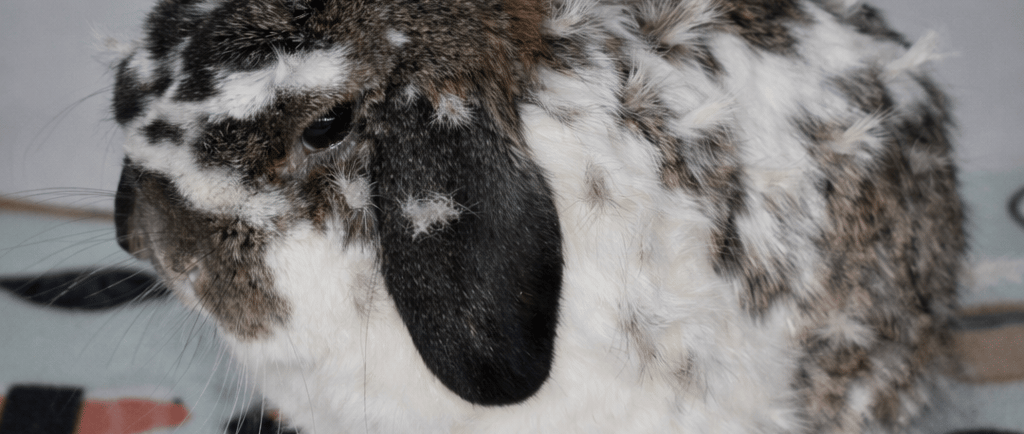
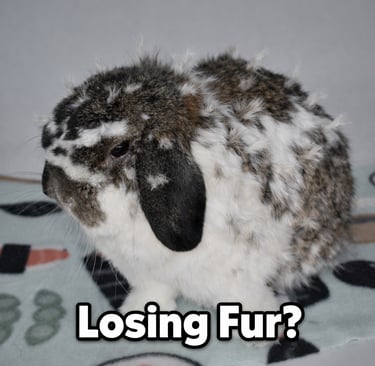
During these times, fur can come out in noticeable amounts. Some rabbits shed gradually, while others seem to release their coat all at once, leaving uneven patches or a slightly ragged appearance for a short time.
It can look concerning if you are not expecting it.
In a normal molt, the skin underneath remains healthy. It should not appear red, irritated, or flaky. The rabbit continues to eat, behave normally, and move comfortably through their environment.
You may notice increased grooming, more loose fur in their space, and sometimes strings of droppings connected by hair as they ingest loose fur during self-cleaning.
While it is not always tidy, it is a natural process. It is helped along with regular brushing to remove the fur from the coat so it can't be ingested by the rabbit and potentially lead to a blockage.
When Fur Loss Is Not Even
Uneven or patchy fur loss deserves a closer look.
If fur is missing in distinct areas rather than shedding evenly, it may point to something more specific. The location of the loss often provides helpful clues.
Behind the neck, along the back, or near the base of the tail can sometimes be areas affected by parasites. Around the face or eyes may suggest irritation or dental-related issues. Sudden bald patches in otherwise stable coats are rarely random.
The skin itself becomes important to observe.
Healthy skin is smooth and consistent. Skin that appears flaky, crusted, scaly, or irritated suggests that something else is going on beneath the surface.
Fur Mites and Other Parasites
Fur mites are one of the more common causes of abnormal fur loss.
They are often not visible to the eye, but their effects certainly are. Fur may lift away easily, sometimes coming out in clumps, leaving behind areas that look dry or flaky. Some rabbits show obvious itching, while others show very little outward discomfort.
Ticks, fleas, and ear mites can also contribute to irritation and fur loss, particularly if the rabbit is spending time outdoors.
A rabbit who is preoccupied with scratching, grooming excessively, or seems distracted from normal eating and resting patterns may be dealing with more than simple shedding.
These conditions require treatment. They do not resolve on their own.
Nutrition and Coat Quality
A rabbit’s coat reflects what is happening internally as much as externally.
Poor nutrition can lead to a coat that appears thin, dull, or slow to recover after shedding. Rabbits rely heavily on long-strand fiber from hay to maintain not only digestive health, but overall condition, including their coat.
A diet that leans too heavily on pellets or treats, or lacks consistent hay intake, may begin to show in the fur over time.
Changes here are usually gradual rather than sudden, but they are no less important.
Stress and Environmental Changes
Rabbits respond to their environment in ways that are not always obvious.
A move, a new animal in the home, changes in routine, or even ongoing low-level stress can affect grooming patterns and overall condition. Some rabbits groom more intensely when unsettled, which can contribute to thinning fur in certain areas.
This type of fur loss is often subtle and tied closely to behavior rather than physical irritation.
Looking at the full picture helps make sense of it.
When It Is Time to Act
It's easy to assume fur loss is “just shedding,” especially during seasonal changes.
That assumption is sometimes correct, but not always. Parasites, nutrition issues, and underlying health problems can look similar in the early stages.
If the fur loss is patchy, the skin looks abnormal, or your rabbit is not behaving normally, do not wait to see if it resolves on its own. Early treatment is simpler and far more effective than waiting for the problem to worsen.
Copyright 2016-present. All rights reserved by Hot Cross Buns Holland Lops. All images and content fall under the sole ownership of Hot Cross Buns Holland Lops.
Hot Cross Buns Holland Lops
Oberlin, Ohio
Indoor companion Holland Lops raised with care since 2016.
Email: hcbhollands@gmail.com