
Can rabbits be scared to death
Can rabbits be scared to death? Learn how extreme stress really affects a rabbit’s body, including heart and long-term risks, and how to keep your rabbit safe.
Amy Jackson & The Hot Cross Buns
5/5/20263 min read
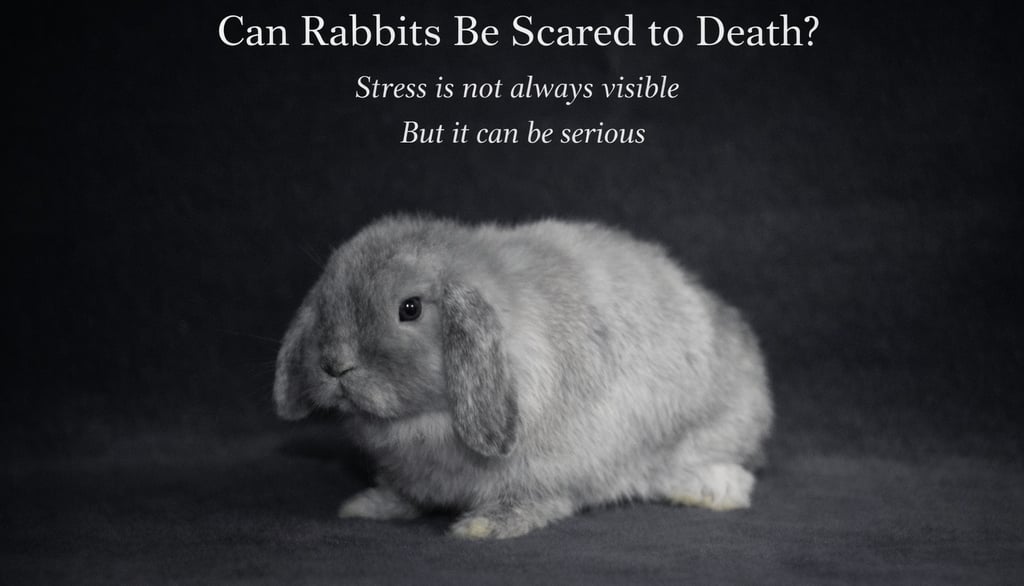
Can Rabbits Be Scared to Death?
When Fear Feels Bigger Than Expected
Rabbits are gentle, highly aware animals. Their understanding of the world is shaped by instincts that are designed to keep them safe.
Because of this, moments of fear can feel significant, even from a human perspective. A sudden noise, the presence of another animal, or an intense experience can leave a lasting impression.
The question often follows quietly: can a rabbit truly be scared to death?
Understanding How Rabbits Experience Fear
Rabbits are prey animals, which means their bodies are built to react quickly and intensely to perceived danger.
When something startles them, their heart rate rises, their muscles tense, and their entire system shifts into a state of alert. This response is meant to help them escape.
In a home environment, that same response can be triggered by things that are not truly dangerous. Loud sounds, sudden movement, or unfamiliar animals can all activate that instinct.
Most of the time, once the moment passes, the rabbit settles and returns to normal behavior.
What Happens Inside the Body During Extreme Stress
In more intense situations, the body’s response becomes stronger and more sustained.
Stress hormones surge, the heart works harder, and the body remains in a heightened state of tension. If that state continues without relief, it can begin to affect how the body functions.
In rare cases, this level of stress can lead to shock or dangerous changes in heart rhythm. A rabbit may collapse immediately, or appear to recover before declining later.
There is also a more subtle effect that is not always visible at first. Significant stress can weaken the heart muscle, even after the initial moment has passed. Days or weeks later, during a period of excitement or increased activity, the added strain on the heart can lead to sudden failure.
This outcome is uncommon, yet it reflects how deeply stress can affect a rabbit’s body.
When Risk Becomes More Likely
Most rabbits will not die from a brief scare. The situations that carry greater risk tend to share a common pattern.
Fear becomes more intense when a rabbit feels exposed, unable to escape, or repeatedly overwhelmed. The presence of a predator, being chased or cornered, or prolonged exposure to frightening stimuli can all increase the strain on the body.
Rabbits who are very young, elderly, naturally anxious, or already dealing with underlying health concerns may be more vulnerable.
The combination of intensity and duration matters more than a single moment of surprise.
The More Common Concern: Ongoing Stress
While sudden, extreme outcomes are possible, they are not the most common concern.
More often, repeated stress affects a rabbit gradually. A home that feels unpredictable, loud, or unsafe can keep a rabbit in a constant state of alertness.
Over time, this can affect appetite, digestion, and overall stability. A rabbit who never fully relaxes is more likely to develop health problems, even if no single event stands out.
Creating a Sense of Safety
A calm, predictable environment allows a rabbit’s body to settle.
Gentle movement, steady routines, and minimizing overwhelming stimuli all help reduce stress. Keeping rabbits separate from animals that trigger fear, such as certain dogs or cats, is often an important part of maintaining that sense of safety.
Providing hiding spaces gives a rabbit the ability to retreat and regain control when something feels overwhelming.
A Balanced Understanding of Risk
It is true that rabbits are sensitive, and that extreme fear can have serious effects.
At the same time, most rabbits are capable of recovering from everyday startles when they are supported by a stable and thoughtful environment. The goal is not to eliminate every unexpected moment, but to ensure that those moments are brief and not repeated in ways that create ongoing strain.
Supporting a Calm and Steady Life
Rabbits thrive in homes where they feel secure.
When their environment is predictable and their interactions are gentle, their natural alertness softens into quiet confidence. In that kind of setting, fear does not disappear, but it no longer defines their experience.
That steady sense of safety protects not only how a rabbit feels in the moment, but how their body functions over time.
Copyright 2016-present. All rights reserved by Hot Cross Buns Holland Lops. All images and content fall under the sole ownership of Hot Cross Buns Holland Lops.
Hot Cross Buns Holland Lops
Oberlin, Ohio
Indoor companion Holland Lops raised with care since 2016.
Email: hcbhollands@gmail.com