
Rabbit Urine: What’s Normal and When to Worry
What color should rabbit urine be? Learn which urine colors are normal, what chalky residue means, and when changes like sludge, dark urine, or blood require veterinary attention.
Amy Jackson & The Hot Cross Buns
6/2/20263 min read
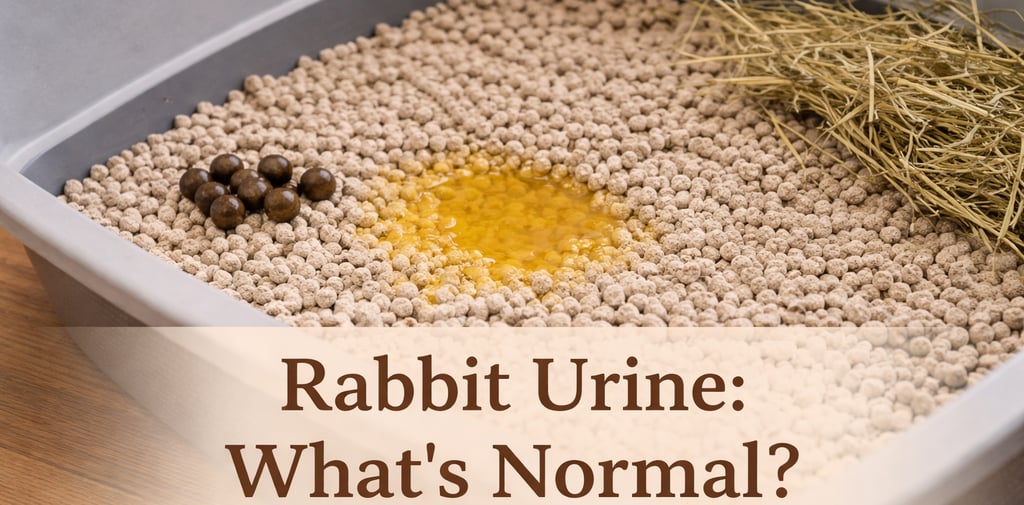

Rabbit Urine: What’s Normal and What Isn’t
Rabbit urine can look…surprising.
Colors shift. It can dry chalky. Sometimes it’s dark, sometimes bright orange, and occasionally even red. For someone new to rabbits, it can feel like something must be wrong.
In many cases, it isn’t.
Understanding what is normal—and what isn’t—can save a lot of unnecessary worry, while also helping you catch real problems early.
What Normal Rabbit Urine Looks Like
Normal rabbit urine is not always clear.
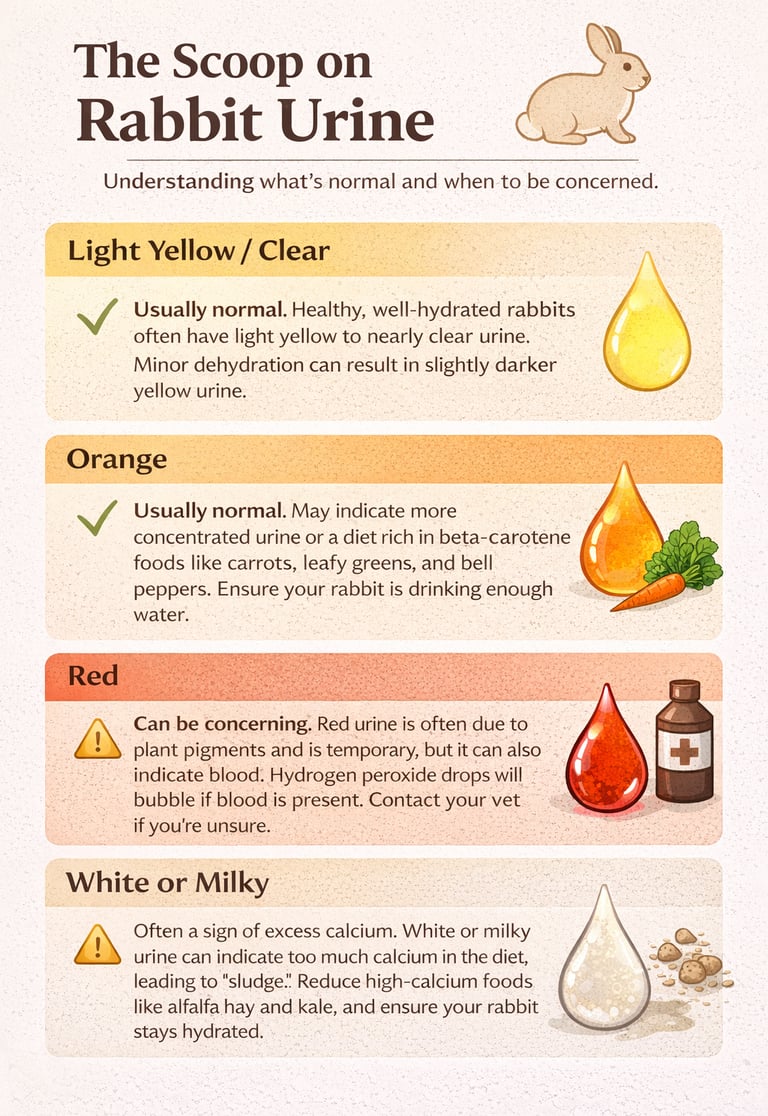
It can range from pale yellow to deep golden orange, and it may appear slightly cloudy. This variation is influenced by diet, hydration, and even seasonal changes.
Rabbits process calcium differently than most animals. Instead of passing excess calcium through their feces, they eliminate it through their urine. This is why dried urine often leaves behind a white, chalky residue.
Occasional chalkiness is normal.
Common Colors (That Are Still Normal)
Rabbit urine can vary widely without indicating a problem.
Yellow to amber
This is the most typical range.
Orange
Often diet-related or slightly more concentrated. Not usually a concern.
Red or rust-colored
This is one of the most alarming for owners, but it is frequently caused by pigments in food (such as leafy greens, carrots, or certain plants), antibiotics, or even seasonal changes.
If the color is uniform, it is rarely blood.
Clear or very light urine
This can occur when a rabbit is very well hydrated.
When Color Needs a Closer Look
Some changes are worth paying attention to, especially when they persist.
Dark brown or very concentrated urine
Often a sign of dehydration. Encouraging more water intake is important.
Frequent thick white urine
Occasional calcium excretion is normal, but frequent, heavy deposits may indicate too much calcium in the diet or an issue developing.
Very cloudy or murky urine
This can suggest a developing bladder problem rather than normal calcium excretion.
Sludge and Sediment
One of the more serious changes to watch for is the presence of sediment.
Urine that looks gritty, pasty, or sandy—often referred to as “sludge”—is not normal. This can indicate a buildup of excess calcium that the body is struggling to eliminate.
Left unaddressed, this can contribute to bladder stones, infection, or discomfort.
Hydration plays a major role here. A well-hydrated rabbit is much less likely to develop concentrated, problematic urine.
What About Blood?
True blood in rabbit urine is uncommon.
One of the easiest ways to tell the difference is how the color appears. Uniform red urine is usually pigment-related. Blood, on the other hand, tends to appear in spots or streaks.
A simple hydrogen peroxide test can help: if it bubbles, blood may be present.
Any suspicion of blood should be taken seriously and evaluated by a rabbit-savvy veterinarian.
Smell and Frequency
Rabbit urine does have a noticeable odor due to its ammonia content.
A strong smell alone is not necessarily a problem, but a sudden change—especially combined with other symptoms—can be worth noting.
Most rabbits urinate several times a day. Changes in frequency, straining, dribbling, or avoiding the litter box can all indicate something beyond normal variation.
A Practical Way to Think About It
Rabbit urine is meant to vary.
Color changes are often normal. Chalky residue is expected. Even dramatic shifts can resolve on their own.
What matters is consistency over time and the presence of other changes.
Normal color, normal behavior → likely fine
Unusual color + normal behavior → monitor
Unusual color + behavioral changes → act
Copyright 2016-present. All rights reserved by Hot Cross Buns Holland Lops. All images and content fall under the sole ownership of Hot Cross Buns Holland Lops.
Hot Cross Buns Holland Lops
Oberlin, Ohio
Indoor companion Holland Lops raised with care since 2016.
Email: hcbhollands@gmail.com