What Are Normal Rabbit Vital Signs?
Learn normal rabbit vital signs, including temperature, heart rate, breathing, water intake, and daily health indicators to recognize early problems. When we know what's "normal" we are better prepared to recognize signs of illness
Amy Jackson & The Hot Cross Buns
7/21/20263 min read
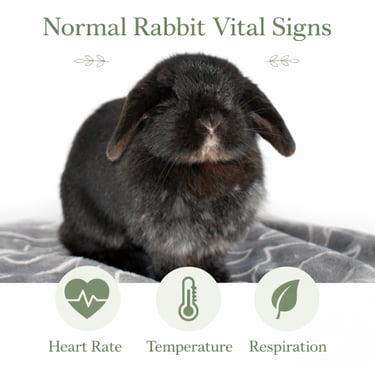
What’s Normal for a Rabbit? A Practical Guide to Vital Signs and Daily Health
One of the most important parts of caring for a rabbit is knowing what is normal.
Rabbits rarely show obvious signs of illness early. Changes tend to be subtle at first, and the only way to recognize them is to understand your rabbit’s normal patterns.
This includes both measurable signs, like heart rate and temperature, and everyday habits like eating, drinking, and litter box use.
Body temperature
A rabbit’s normal body temperature is:
101°F to 103°F (38.3°C to 39.4°C)
Temperatures outside this range matter.
Below 100°F can indicate shock or serious illness
Above 103.5°F–104°F can indicate infection or heat stress
Temperature is typically taken rectally and can be stressful for rabbits, so it is not something most owners check routinely at home.
More often, changes in behavior are the first sign that something is wrong.
Heart rate
A normal heart rate for a rabbit is:
130–325 beats per minute
This wide range depends on:
size
stress level
activity
A calm rabbit at rest will be toward the lower end. A stressed or frightened rabbit will be much higher.
Heart rate is not usually monitored at home, but a very fast or very weak heartbeat at rest can indicate a problem.
Breathing rate
Normal breathing rate is:
30–60 breaths per minute
Breathing should be:
quiet
steady
not visibly labored
Concerning signs include:
rapid breathing at rest
open-mouth breathing
exaggerated movement of the sides or abdomen
Breathing changes should always be taken seriously.
Water intake
Water intake varies, but most rabbits drink approximately:
50–150 mL per kilogram of body weight per day
roughly 1.5–5 ounces per 2.2 pounds (1 kg)
In practical terms:
a small rabbit may drink about ½ cup (4 ounces) daily
larger rabbits may drink ¾ to 1 cup (6–8 ounces) or more
What matters most is consistency.
Sudden changes in drinking habits—either increased or decreased—can signal a problem.
Many rabbits drink more readily from a bowl than from a bottle. Bowls allow a more natural drinking position and often result in better hydration. Bottles can still be used, but they should be checked regularly to ensure proper flow.
Appetite and eating behavior
A healthy rabbit:
eats hay consistently throughout the day
shows interest in food
does not hesitate or pick selectively
Changes to watch for:
slowing down while eating
leaving favorite foods
choosing pellets over hay
reduced overall intake
These are often early signs that something is wrong.
Droppings (fecal output)
Normal droppings are:
round
dry
consistent in size
produced frequently
Changes that matter:
smaller droppings
fewer droppings
misshapen or inconsistent size
A sudden decrease in droppings is one of the most important early warning signs.
Urination
Rabbit urine can vary in color from pale yellow to deep rust.
Normal urine may:
appear cloudy
leave a chalky residue
What is not normal:
straining
very small amounts
thick, paste-like consistency
signs of discomfort while urinating
Behavior during urination matters more than color alone.
Activity and behavior
A healthy rabbit will:
move freely
explore their environment
respond to familiar routines
show interest in food and surroundings
Changes to watch for:
reduced movement
hiding more than usual
reluctance to interact
sitting in unusual postures
These shifts are often early indicators of illness.
Body condition and posture
A comfortable rabbit:
sits in a relaxed posture
stretches out or rests normally
keeps their body balanced and supported
Signs of concern:
hunched posture
reluctance to move
shifting frequently without settling
Posture is one of the clearest indicators of discomfort.
Grooming and appearance
A healthy rabbit:
maintains a clean coat
keeps their face and paws clean
grooms regularly
Changes to watch for:
unkempt or dull coat (aside from regular molting)
dampness around the mouth or hind end
reduced grooming
These can indicate underlying issues.
A practical perspective
You do not need to memorize every number.
What matters most is:
consistency
daily observation
recognizing change
A rabbit’s normal is established over time.
When something shifts, that is what deserves attention.
A final thought
Rabbits depend on their caregivers to notice what they cannot communicate.
Understanding what is normal allows you to recognize when something is not—and respond before it becomes more serious.
Copyright 2016-present. All rights reserved by Hot Cross Buns Holland Lops. All images and content fall under the sole ownership of Hot Cross Buns Holland Lops.
Hot Cross Buns Holland Lops
Oberlin, Ohio
Indoor companion Holland Lops raised with care since 2016.
Email: hcbhollands@gmail.com