
How to Clean a Rabbit's Ears (and When Not To)
Learn how to clean a rabbit's ears safely, when cleaning is appropriate, when veterinary care should be sought and how to recognize signs of mites or infection.
Amy Jackson & The Hot Cross Buns
7/23/20262 min read
How to Clean a Rabbit’s Ears (and When to Leave Them Alone)
Cleaning a rabbit’s ears is not something that should be done routinely.
Healthy rabbit ears are generally self-maintaining. Over-cleaning can cause irritation and can sometimes create problems where none existed before.
The goal is not to clean regularly. The goal is to recognize when cleaning is appropriate—and when it is not.
What normal rabbit ears look like
A healthy ear should be:
clean or lightly waxy
pale pink inside
free of strong odor
not inflamed or irritated
Some light wax is normal and does not need to be removed.
If the ear looks comfortable and your rabbit is not bothered by it, it is best left alone.
Why regular ear checks matter
While routine cleaning is not necessary, regular observation is important.
Checking your rabbit’s ears periodically allows you to:
notice changes early
identify buildup before it becomes a problem
recognize signs of mites or infection
This does not need to be a formal process. A quick look during normal handling is often enough.
When cleaning may be appropriate
Ear cleaning may be appropriate if you notice:
visible wax buildup near the outer ear
debris that is easy to reach
mild accumulation that is not deep in the ear
Cleaning should be limited to what you can clearly see and access safely.
When NOT to clean the ears
Do not attempt to clean your rabbit’s ears if you notice:
dark, crusty debris (possible ear mites)
strong odor
redness or swelling
discharge deeper in the ear
head shaking, scratching, or sensitivity
These are signs of a problem that requires veterinary care.
Cleaning in these situations can cause pain and may worsen the condition.
Common ear issues to recognize
Two of the most common ear problems in rabbits are:
Ear mites
dark, crusty debris
itching and scratching
head shaking
Ear infections
redness or swelling
discharge or odor
discomfort or reduced appetite
Both require proper diagnosis and treatment.
What to use
Keep it simple and controlled.
You will need:
a soft cloth or cotton pad
optionally, a veterinarian-recommended ear cleaner
Avoid:
cotton swabs (Q-tips)
inserting anything into the ear canal
alcohol, peroxide, or non-rabbit-safe products
If you are unsure, do not use it.
How to clean safely
Place your rabbit in a secure, calm position
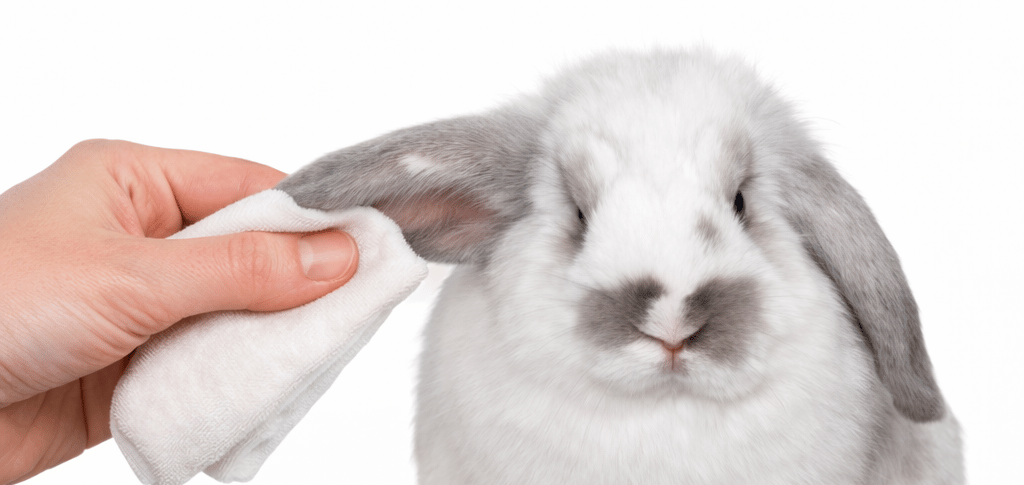
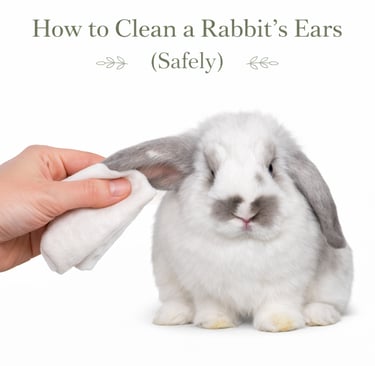
Gently lift the ear to see the inside clearly
Use a slightly damp cloth or pad to wipe away visible debris
Clean only the outer portion of the ear
Stop if your rabbit becomes stressed or resistant
Cleaning should be brief and minimal.
A note on lop-eared rabbits
Lop-eared rabbits may be more prone to wax buildup due to reduced airflow.
They may require more frequent checks, but the same rules apply:
clean only what is visible
avoid deep cleaning
monitor for irritation
If buildup is persistent or difficult to manage, veterinary care is appropriate.
What to do if something seems off
If you notice:
ongoing buildup
signs of discomfort
changes in behavior
discharge or odor
Do not try to manage it at home.
A veterinarian can determine whether the issue is:
mites
infection
or another underlying condition
A practical perspective
Ear care is not about routine cleaning.
In most cases:
healthy ears do not need intervention
observation is more important than action
less handling reduces stress and risk
Knowing when to leave the ears alone is part of good care.
A final thought
Rabbit ears are sensitive and easily irritated.
A careful, minimal approach protects both their comfort and their health.
Observation, not routine cleaning, is what keeps ears in good condition.
Copyright 2016-present. All rights reserved by Hot Cross Buns Holland Lops. All images and content fall under the sole ownership of Hot Cross Buns Holland Lops.
Hot Cross Buns Holland Lops
Oberlin, Ohio
Indoor companion Holland Lops raised with care since 2016.
Email: hcbhollands@gmail.com