
Holland Lop Development Stages Compared to Human Ages
Learn how Holland Lop development stages compares to human ages and and typical growth, from baby through senior years, with helpful insights for each phase along the way.
Amy Jackson & The Hot Cross Buns
3/4/20242 min read
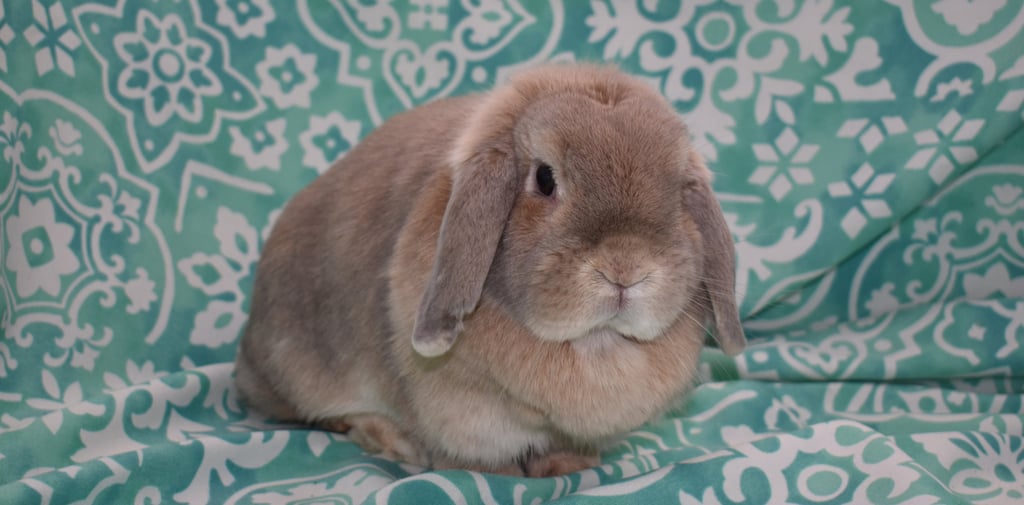
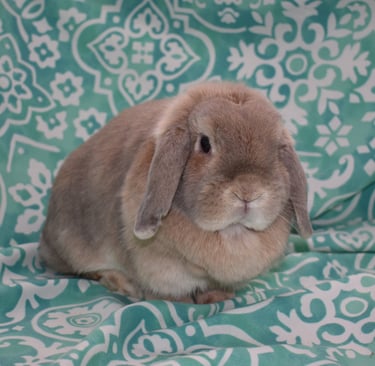
How a Holland Lop’s Development Compares to Human Ages and Stages
Understanding Growth Through a Familiar Lens
Watching a rabbit grow is a quiet, unfolding experience. Changes happen quickly at first, then gradually settle into a slower rhythm over time.
For many families, it can be helpful to understand those changes through a familiar lens. Comparing a rabbit’s development to human stages offers a way to recognize what is typical, what may be changing, and what a rabbit may need at different points in life.
These comparisons are not exact. They are simply a way of making sense of stages that become clear over time.
What Shapes a Rabbit’s Development
Not every rabbit will move through these stages at the same pace.
Development can be influenced by many factors, including diet, genetics, exercise, and overall health. Whether a rabbit is a true dwarf or false dwarf, whether they have experienced stress, or whether they have been bred can all affect how quickly they mature and how they age.
Because of this, the stages below should be viewed as general observations rather than fixed timelines.
Early Life and Rapid Change
The earliest weeks of a rabbit’s life move quickly.
The period from birth through three weeks is similar to human infancy. During this time, development is rapid, and the rabbit is entirely dependent on the doe.
From three to five weeks, a rabbit begins to explore more actively, similar to a toddler. Curiosity increases, and early personality traits begin to appear.
Between five and twelve weeks, a rabbit moves into a stage comparable to early childhood. This is a time of learning, movement, and growing awareness of their environment.
The Adolescent Phase
Between twelve weeks and four months, a rabbit begins to enter a stage similar to pre-adolescence.
Independence increases, and behavior may begin to shift. By four to seven months, many rabbits move into what can best be described as adolescence.
During this time, personality becomes more defined. Energy levels are often high, and behaviors related to hormones may begin to emerge. This is often when families first begin to see the adult rabbit starting to take shape. They also take care of spaying/neutering at this time.
Adulthood and Stability
From around seven months through two and a half years, a rabbit settles into early adulthood.
This is typically a period of stability. Energy is still present, but behavior becomes more predictable. The rabbit’s personality is more clearly established, and routines become easier to maintain.
From two and a half to six years, most rabbits are in what could be considered middle age. They remain active and engaged, though subtle shifts in energy and preference may begin to appear.
The Senior Years
Between six and nine years, rabbits enter their senior stage.
They often begin to slow down slightly, though many continue to enjoy their environment and routines. Comfort becomes more important, and small changes in mobility or preference may become noticeable.
From nine years and beyond, rabbits are considered elderly. At this stage, physical changes are more apparent. They may become more delicate, require additional support, and benefit from a quieter, more predictable environment.
Seeing Your Rabbit as an Individual
While these comparisons can be helpful, no chart can fully define an individual rabbit.
Some rabbits remain energetic well into their senior years. Others slow down earlier. What matters most is learning to recognize your rabbit’s normal patterns and noticing when something begins to change.
These observations come not from a chart, but from daily life together.
hcbhollands@gmail.com
Copyright 2017-present. All rights reserved by Hot Cross Buns Holland Lops. All images and content fall under the sole ownership of Hot Cross Buns Holland Lops.