Hay 101: What Kind, How Much, and Why It Matters
Hay is the foundation of a rabbit’s diet and it does far more than many owners realize. In this post, I explain the different types of grass hay, how much your rabbit truly needs, the difference between first, second, and third cuttings, and why consistent hay intake protects long term digestive and dental health.
Amy Jackson
3/1/20265 min read
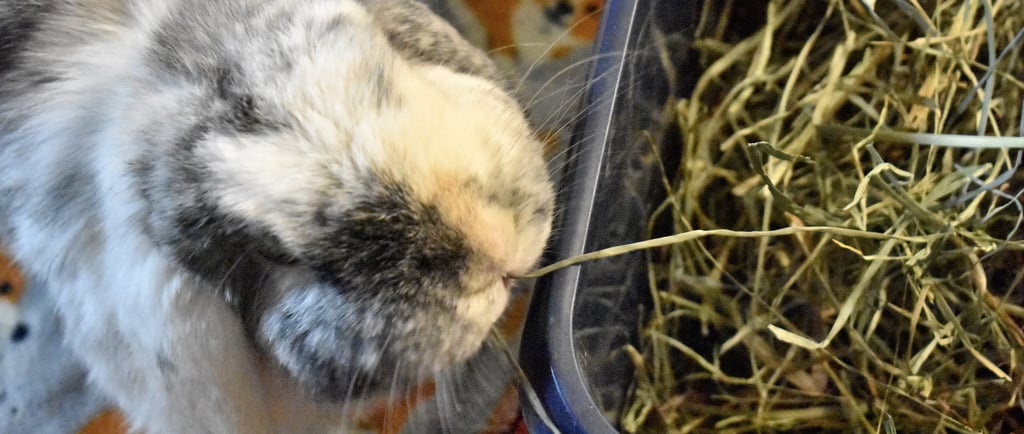
When people ask me what matters most in a rabbit’s diet, my answer is simple; hay.
Everything else is supplemental. Hay is the foundation.
Over the years, I have seen again and again that rabbits who eat hay enthusiastically tend to be the rabbits who stay the most stable; steady digestion, steady appetite, and steady health.
When hay intake drops, something is usually brewing internally.
Understanding what kind of hay to feed, how much your rabbit truly needs, and why it matters will prevent more problems than almost anything else you can do.
Why Hay Matters So Much
Rabbits are grazing herbivores. Their digestive systems are designed to process fibrous plant material continuously.
That steady intake of fiber keeps everything moving the way it should.
Hay supports:
• Healthy gut motility
• Proper cecal fermentation
• Natural dental wear
• Consistent droppings
• Stable appetite
Dental wear is especially important. Rabbit teeth grow continuously throughout life; chewing long strand fiber keeps them properly aligned.
In compact breeds such as Holland Lops, whose facial structure can make early dental changes harder to detect, steady hay intake becomes even more protective.
When a rabbit begins eating less hay, droppings often become smaller first, which is followed by appetite shifts and posture changes that indicate discomfort.
Those subtle shifts matter.
Reduced hay intake is frequently one of the earliest signs of gastrointestinal slowdown.
If you notice it, please do not brush it off.
What Kind of Hay Should You Feed?
For most pet rabbits, grass hays should make up the majority of the diet.
Timothy Hay
The most commonly recommended hay; balanced; reliable; and widely available.
Orchard Grass
Softer in texture; often helpful for rabbits who turn up their noses at timothy.
Meadow Hay
A blend of grasses; useful for variety and enrichment.
For healthy adult rabbits, these grass hays should be available at all times.
Understanding Hay Cuttings
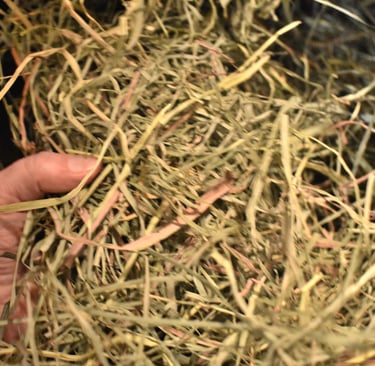
Not all timothy or orchard hay is the same. The “cutting” refers to when during the growing season the hay was harvested; each cutting has slightly different characteristics.
Over time, I have learned to pay attention to this, especially during molting season.
First Cutting
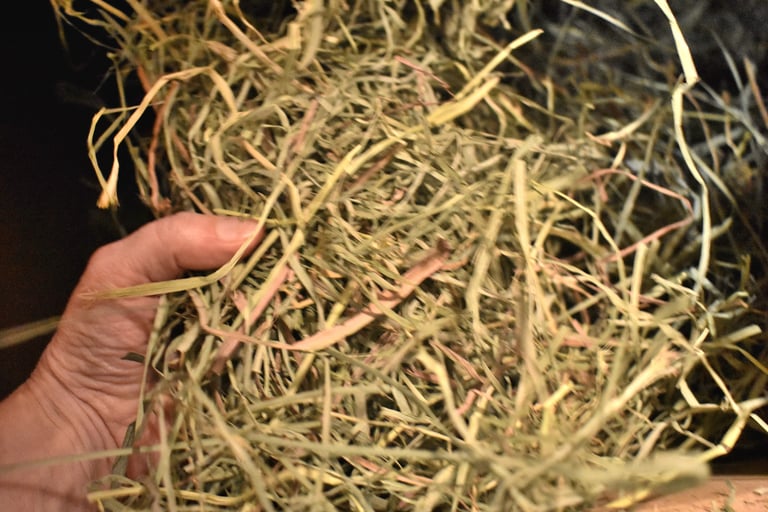
First cutting hay is harvested earlier in the season. It is typically:
• More stemmy
• Higher in structural fiber
• Lower in leaf content
• Slightly coarser in texture
Because it is more fibrous, I prefer first cutting during heavy molting periods. The extra long strand fiber seems to help move ingested fur through the digestive tract more efficiently.
It is also excellent for dental wear. The coarser stems require more chewing, which supports natural tooth alignment.
Some rabbits find first cutting less appealing; others do very well on it.
Second Cutting
Second cutting is harvested later and is often:
• Softer
• Leafier
• More fragrant
• Slightly higher in protein than first cutting
For most of the year, this is the preferred balance.
It encourages strong hay intake while still providing adequate fiber.
For many households, second cutting is the easiest everyday choice.
Third Cutting
Third cutting is harvested even later in the season and is typically:
• Very soft
• Very leafy
• Lower in structural fiber
• More calorie dense
I often describe third cutting as dessert hay.
Rabbits usually love it, but because it is softer and lower in coarse fiber, I do not consider it as a primary long term option for healthy adults.
It can be useful for:
• Encouraging picky eaters
• Supporting underweight rabbits
• Mixing with coarser hay to increase overall intake
As with most things in rabbit care; balance matters.
What About Alfalfa?
Alfalfa is richer and higher in protein, calcium, and calories.
It has its place.
Young, growing rabbits benefit from it. Underweight rabbits may also require it under veterinary supervision.
For most healthy adult rabbits, however, alfalfa is too rich to serve as the primary hay long term.
Because of its higher calcium content, prolonged feeding in adults can lead to excess calcium excretion through the urinary system. Over time, this may increase the risk of sludge, bladder stones, and added strain on the kidneys.
Consistently feeding excess calories and protein to adult rabbits who do not require them can also contribute to metabolic stress, particularly in sedentary indoor rabbits.
For these reasons, grass hays are the safer long term foundation for adult rabbits.
How Much Hay Should a Rabbit Eat?
The simple answer; unlimited.
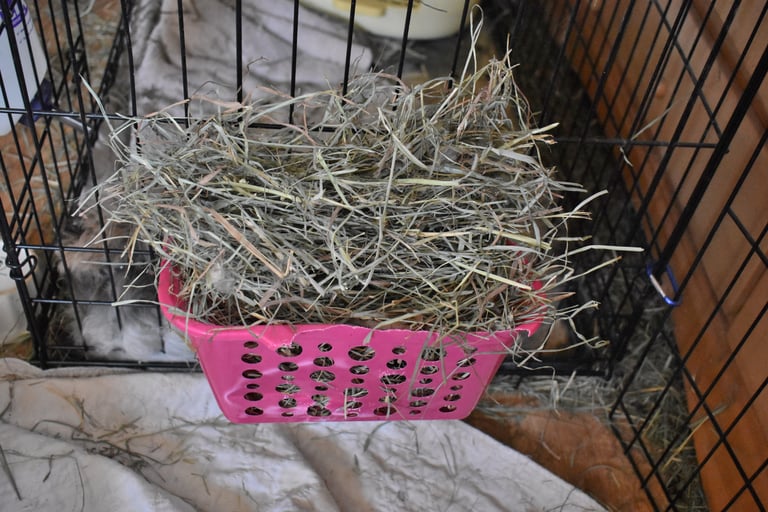
Hay should be available at all times; fresh; clean; and accessible.
As a general rule, a healthy adult rabbit will eat a daily volume of hay roughly equal to their body size.
If you are not refilling hay every day, your rabbit may not be eating enough.
Pellets are supplemental. Hay is foundational. If your rabbit consistently chooses pellets and leaves hay behind, it needs to be addressed.
How Hay Protects Against Gastrointestinal Stasis
Fiber keeps the digestive system moving.
When fiber intake drops:
• Motility (intestinal movement) slows
• Gas builds
• Appetite decreases
• Pain increases
This cycle can begin quietly and escalate faster than many people expect.
In many cases, gastrointestinal stasis begins with something simple: reduced hay intake.
If your rabbit stops eating hay entirely, that is not something to monitor overnight.
Signs Your Rabbit Is Not Eating Enough Hay
Watch for:
• Smaller droppings
• Fewer droppings
• Selective pellet eating
• Hay sitting untouched
• Weight gain from excess pellets
• Soft or irregular fecal pellets
Healthy droppings reflect adequate fiber intake.
Common Hay Mistakes
Over time, I have seen a few patterns that cause trouble:
• Feeding too many pellets and unintentionally reducing hay interest
• Offering dusty or poor quality hay
• Storing hay in sealed plastic where moisture can build
• Feeding alfalfa long term to adult rabbits
• Not refreshing hay frequently
Rabbits can be surprisingly particular; fresh hay often makes a noticeable difference.
Encouraging Better Hay Consumption
If your rabbit is not eating enough hay, start gently:
• Reduce pellet quantity slightly and gradually
• Offer a different grass variety
• Mix orchard with timothy
• Keep hay clean and elevated
• Offer several small piles instead of one large one
If overall appetite is decreasing, that is not a feeding preference issue; it is a veterinary conversation.
Final Thoughts
Hay is preventative medicine.
It protects digestion, dental health, healthy weight, and long term stability.
When a rabbit eats hay eagerly, I relax a little. When hay intake drops, I pay attention.
You do not need to panic, but you do need to notice.
Many serious digestive issues begin quietly. Small changes in appetite and droppings usually come first.
Because rabbit health issues can escalate quickly, I created a step by step guide called When Your Rabbit Is Sick. It walks through early warning signs, how to assess appetite and droppings, when supportive care may be appropriate, and when veterinary care should not be delayed.
It is designed to reduce hesitation; not increase fear.
You can find it in the HCB Shoppe on this site.
Calm recognition prevents crisis.
hcbhollands@gmail.com
Copyright 2017-present. All rights reserved by Hot Cross Buns Holland Lops. All images and content fall under the sole ownership of Hot Cross Buns Holland Lops.