
Fleas in Rabbits: Safe Treatment and What to Avoid
Learn how to safely treat fleas in rabbits, including rabbit-safe medications, what products to avoid because they are dangerous or can prove to be fatal, and how to prevent re-infestation in your home.
Amy Jackson & The Hot Cross Buns
7/7/20262 min read
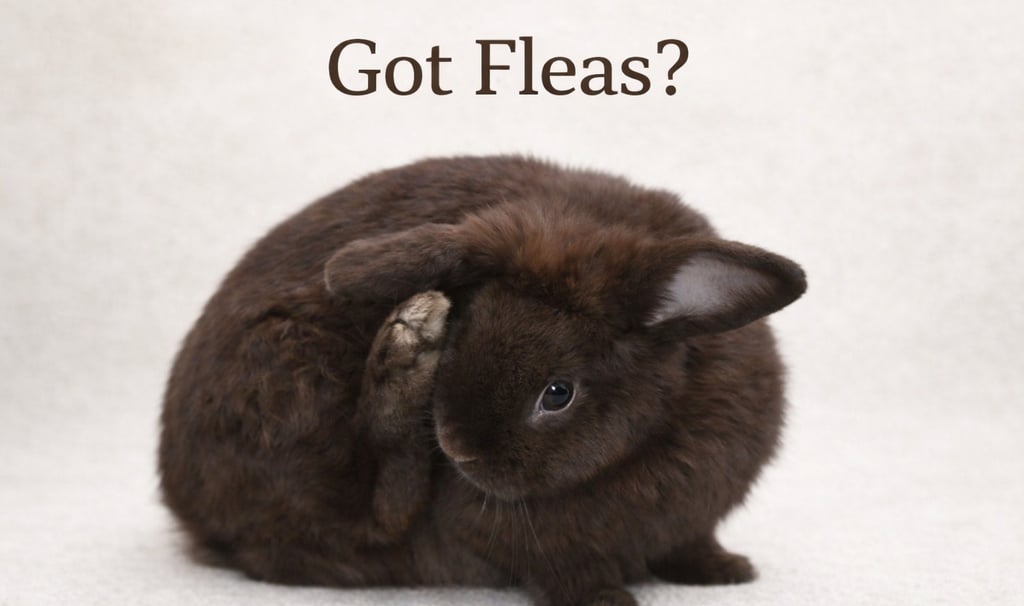

Fleas in Rabbits: Safe Treatment and What to Avoid
Fleas are not a common problem for most house rabbits, but they can occur.
When they do appear, it's important to treat them correctly. Rabbits are sensitive to many medications that are considered safe for other animals, and incorrect treatment can be dangerous or even fatal.
How rabbits get fleas
Rabbits do not typically develop fleas on their own.
Exposure usually comes from:
dogs or cats bringing fleas into the home
time spent outdoors
contact with contaminated environments
Even house rabbits can be affected if other pets are not treated.
Signs to watch for
Fleas are not always obvious right away.
Watch for:
increased scratching or restlessness
small dark specks in the fur (flea dirt)
visible fleas moving through the coat
mild hair loss or irritated skin
Because rabbits groom frequently, signs may be subtle at first.
Safe treatment options
Treatment should be simple and specific.
Medications commonly used safely in rabbits include:
selamectin (Revolution)
imidacloprid (Advantage)
These should be prescribed and used only with proper dosing, under veterinary guidance.
What to do:
Confirm that fleas are present
Use only rabbit-safe medications
Treat other pets in the home at the same time
Addressing only the rabbit without treating the source often leads to re-infestation.
⚠️ What NOT to use on rabbits
Some flea treatments are dangerous or fatal to rabbits.
Do not use:
fipronil (Frontline)
permethrin-based products
flea collars
dog or cat sprays, powders, or spot treatments not labeled safe for rabbits
Even small amounts can cause serious reactions.
If you are unsure about a product, do not use it.
Environmental control
Treating the rabbit is only part of the solution.
To prevent recurrence:
wash bedding regularly
vacuum frequently
treat other animals in the home
limit exposure to untreated outdoor areas
Fleas live in the environment as well as on the animal.
A note on natural approaches
Diatomaceous earth (DE) is sometimes used in the environment.
If used:
choose food-grade DE only
apply lightly and avoid creating dust
do not apply near the face or where it can be inhaled
DE can help in dry environments, but it is not a substitute for proper treatment when fleas are present.
Ticks in rabbits (less common)
Ticks are far less common than fleas but may occasionally be found, especially with outdoor exposure.
In most cases, removal is all that is needed.
What to do:
use fine-tipped tweezers (or a tick "popper" tool)
grasp close to the skin
pull steadily without twisting
After removal, monitor the area for irritation.
Ongoing treatment is rarely necessary for ticks in house rabbits.
A practical approach
If you suspect fleas:
confirm what you are seeing
avoid over-the-counter treatments unless confirmed safe
use appropriate medication
address the environment and other pets
Simple, targeted action is more effective than aggressive or repeated treatment.
A final thought
Fleas can be managed effectively when treated correctly.
The most important step is not acting quickly, but acting appropriately. Knowing what is safe—and what is not—protects your rabbit and prevents unnecessary complications.
Copyright 2016-present. All rights reserved by Hot Cross Buns Holland Lops. All images and content fall under the sole ownership of Hot Cross Buns Holland Lops.
Hot Cross Buns Holland Lops
Oberlin, Ohio
Indoor companion Holland Lops raised with care since 2016.
Email: hcbhollands@gmail.com